
Guide · October 18, 2026 · 11 min read
Emergency help with mortgage payments in Utah starts with two free calls, and neither one is to us.
Federal and Utah rules give you more time than the letters make it feel like. Spend it on your servicer and a free counselor first. Selling is the fourth call, and only when the numbers say so.
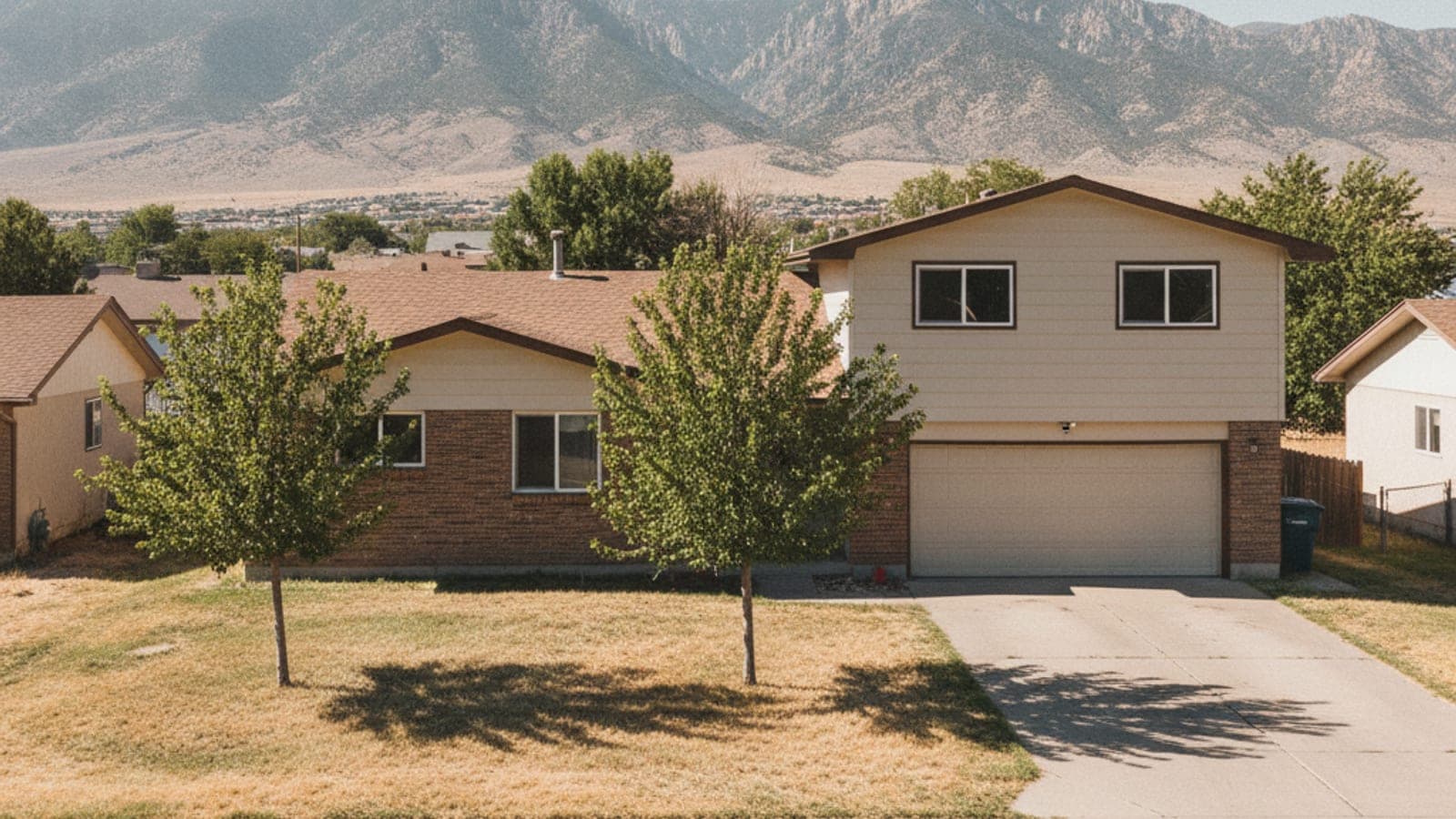
Emergency help with mortgage payments starts with two free calls: your loan servicer’s loss mitigation department, then a HUD-approved housing counselor. The earlier you make them, the more options you have. Federal rules generally bar a servicer from starting foreclosure until you are more than 120 days behind, and Utah law adds at least three months after that.
We buy houses for cash, so read this knowing we are the fourth call on the list below. Homeowners counseled early in a default are far more likely to get a loan modification or keep their homes than those who wait, according to HUD’s summary of the research. Keeping the house beats selling it to anyone, us included, and selling only makes sense when the payment will not fit again even after the help.
Who should you call first when you cannot pay your mortgage?
Your servicer, then a HUD-approved housing counselor, then 211 for the other bills. A buyer comes fourth, and only if the first three calls cannot make the payment fit.
- First, the servicer. The company on your monthly statement, which may not be the bank that made the loan. Ask for loss mitigation, say when the income stopped, and ask for the application for help. Note who you spoke to and when. Under 12 CFR 1024.39 the servicer must try to reach you by day 36 of a delinquency and send written notice of your options by day 45, so a letter may already be in the pile.
- Second, a HUD-approved counselor. Search by ZIP code with the CFPB’s counselor finder, or call HUD at 800-569-4287, the number on HUD’s foreclosure help page. At no cost to you, a counselor builds the budget, helps with the hardship letter and the application, and explains which options fit your loan.
- Third, 211 and Workforce Services. 211 Utah is free and confidential: dial 211, or text your ZIP code to 801-845-2211. Help with utilities or medical bills frees cash for the payment. After a job loss, file for unemployment through Workforce Services; the servicer will ask what income is coming in.
- Fourth, a buyer, if the arithmetic says so. If the payment still will not fit, compare selling while the equity is yours.
What happens when you are 30, 60, 90 or 120 days late on a mortgage?
At 30 days the loan is in default and can reach your credit report, and by days 36 and 45 the servicer must contact you. At 60 and 90 days the arrears and fees stack up. Only after 120 days can a foreclosure filing usually begin, and in Utah the sale is months after that.
| Days late | What usually happens | Source |
|---|---|---|
| 1 to 15 | Late, but on a typical loan no late fee yet | Your note; the CFPB homeowner guide describes no fee before the 15th |
| 30 | In default. May be reported to the credit bureaus, and more fees can start | CFPB guide |
| 36 | Servicer must try to reach you by phone, and again after each missed due date | 12 CFR 1024.39(a) |
| 45 | Servicer must send written notice of the help available, with how to reach HUD-approved counselors | 12 CFR 1024.39(b) |
| 60 | Two payments behind, with a late fee for each missed month | CFPB guide |
| 90 | Three payments behind, which a short repayment plan struggles to absorb | The arithmetic below |
| 121 | The first foreclosure notice or filing becomes possible, unless a complete application for help is still being decided | 12 CFR 1024.41(f) |
On a $2,000 payment, three months behind is $6,000 before fees. Repayment plans generally run 2 to 6 months, the CFPB guide says, so catching up over six months adds about $1,000 a month to the payment. At one month behind it adds about $333, which is why the early call matters.
In Utah the first filing is usually a notice of default, recorded with the county. Utah Code 57-1-24 then requires at least three months before notice of sale, which 57-1-25 has published weekly for three weeks, the last at least 10 days before the sale. Inside those three months, 57-1-31 lets you reinstate by paying what is due plus the costs actually incurred. By our arithmetic, no trustee’s sale comes much sooner than eight months after the first missed payment. Your notice governs, and we are not lawyers. Our foreclosure page walks through the Utah process.
What emergency help with mortgage payments can your servicer offer?
Usually some mix of forbearance, a repayment plan, a payment deferral, a loan modification and, on FHA and VA loans, a partial claim. What you can get depends on who owns or insures the loan, and the servicer decides.
| Option | What it does | Fits when | Ask before you sign |
|---|---|---|---|
| Forbearance | Pauses or reduces payments for a set time; the skipped amount is still owed | The income gap has an end date | How the skipped amount is repaid |
| Repayment plan | Adds part of the arrears to each payment until you are current: generally 2 to 6 months, up to 12 on a Freddie Mac loan | Income is back and you can pay extra for a while | The monthly total, in writing |
| Payment deferral | Moves the missed payments to the end of the loan; the payment stays the same. Freddie Mac offers it on loans it owns | The hardship is over, but you cannot repay the arrears | When the deferred amount comes due |
| Loan modification | A permanent change to the terms. On an FHA loan the arrears go onto the balance and the term is extended at a fixed rate. Often after a 3 or 4 month trial | Income is lower for good, but a lower payment would fit | The new payment, rate and term |
| FHA partial claim | Puts the arrears in an interest-free second lien, repaid at payoff, sale or certain refinances | FHA loan, and the payment fits again | FHA allows one permanent option like this per 24 months |
| VA partial claim | VA pays the missed payments; you repay it at payoff or sale. A 3-month trial plan comes first | VA loan, and the payment fits again | Does your servicer offer it yet? VA gives servicers until November 28, 2026 |
The FHA details are from HUD’s loss mitigation page. If USDA is your direct lender, the CFPB says to call USDA at 800-414-1226.
Send the application early. Under 12 CFR 1024.41, a complete application received more than 37 days before any sale gets a written answer within 30 days, and one received before the first foreclosure filing generally holds that filing while it is decided. County property tax relief and other routes that keep the house are on our homeowner relief options page.
What does this look like for a West Valley City homeowner two payments behind?
Four calls in order, and on these numbers she keeps the house. She is a hypothetical with round numbers, not a client of ours.
Her house is a 1970s split-level in West Valley City with a $1,900 payment on an FHA loan. She lost her job in June, missed the July 1 and August 1 payments, and on August 20 is 50 days behind: $3,800 plus two late fees.
- Call one, the servicer. She asks for loss mitigation and the application. The day-45 letter was already in the pile, and the application lists what to send: the unemployment award letter, bank statements, a hardship letter.
- Call two, a counselor. She finds a free HUD-approved agency in Salt Lake County through the CFPB’s search. Together they build a budget and send a complete application in early September, weeks before October 30, the first day a foreclosure filing would be allowed.
- Call three, 211. She filed for unemployment the week the job ended. 211 finds her two months of help with the power and gas bills, about $250 a month.
- Call four, the arithmetic. A new job starts October 1 at slightly lower pay, and after every other bill $1,900 fits again. In this example the servicer approves an FHA partial claim for the roughly $5,700 missed from July through September, repaid when she sells, refinances or pays off the loan.
The answer changes if the new job pays $1,300 a month less and even a modified $1,650 payment leaves her short. Then the payment will not fit again, and the fourth call is about selling, while the equity is hers and there is time to list or pick a closing date. Our West Valley City page covers selling there.
How do you tell real mortgage help from a scam?
Real help does not charge up front. Under FTC rules, a company cannot charge you anything for mortgage relief until it has given you a written offer from your lender and you have accepted it.
The FTC’s warning signs:
- A fee before any service.
- Being told to stop talking to your lender.
- Being told to send your payments to the company instead of the lender.
- Being asked to sign the deed over to them.
Lawyers licensed in Utah doing real legal work are the narrow exception, and only through a client trust account. HUD warns that for-profit companies charge for help your lender or a HUD-approved counselor gives free. If the pitch comes from someone offering to buy the house, see our post on we buy houses scams.
When does selling the house make sense instead?
When the payment will not fit your income again, even after forbearance, a modification or a partial claim. If the gap was temporary, keep the house. If it is permanent, selling while the equity is yours beats a trustee’s sale.
The test is the CFPB guide’s worksheet: take-home pay once the help ends, minus the payment offered, minus every other debt. What is left has to cover food, utilities and repairs. If it does not, month after month, the help only moves the problem later.
If the house is in decent shape and you can wait three months, an agent will usually net you more than a cash buyer. If the dates are tighter, a cash sale is the other route: a written offer typically within 24 hours, closing in as little as 7 days or on a later date you pick, no commission, no fees, and we pay the closing costs on our purchases. The loan and the missed payments come out of the proceeds at closing. Our foreclosure page covers selling with a notice in hand.
Questions people ask
Is the Utah Homeowner Assistance Fund still open?
Not as far as we can find. The Utah Homeowner Assistance Fund (officially the Utah Homeowners Assistance Fund) was a federal pandemic program run by the Department of Workforce Services, paying up to $35,000 per household. Its Treasury term sheet ends the award period on September 30, 2026, and on October 18, 2026 its state website no longer loaded. Ask a HUD-approved counselor or 211 whether anything has replaced it.
Where do you find mortgage assistance in Utah now?
From your servicer’s loss mitigation department first, because most of the mortgage assistance Utah homeowners can still get comes through servicer programs. The other free routes open today are a HUD-approved counselor, 211 Utah for the other bills, and your county treasurer for property tax relief.
Does a HUD-approved housing counselor cost anything?
No. The CFPB says there is no charge to work with a HUD-approved housing counseling agency when you are having trouble paying your mortgage. Find one by ZIP code with the CFPB’s counselor finder, or call HUD at 800-569-4287. Anyone charging up front for the same help is a warning sign.
Can the servicer start foreclosure while my application is being reviewed?
Generally not, if the complete application arrived before the first foreclosure filing. Under 12 CFR 1024.41(f)(2), the servicer cannot file until you are found eligible for nothing and any appeal is over, you turn down every option, or you fall behind on an agreed plan. Keep proof of the date you sent it.
What if a notice of default has already been recorded?
You still have time. Utah Code 57-1-24 requires at least three months after the notice of default is recorded before notice of sale, and 57-1-31 lets you reinstate inside that window by paying what is due plus the allowed costs. Call the servicer and a counselor that day and ask for a written reinstatement figure.
Keep the house if the help can make the payment fit. If the arithmetic says it never will, a written number is worth setting next to the counselor’s plan. Get your cash offer: it is free, in writing, typically within 24 hours, and you are free to say no.
Find out what your house is worth in cash. Free, and no strings.
One phone call, or one short form. You'll have a real number by this time tomorrow.
Tell us about the house
Where the house is, your name, and a number we can reach you on. We call back within one business day, and you're free to say no.