
Guide · October 15, 2026 · 8 min read
How to sell a house fast in a slow market.
A slow market does not stop houses from selling; it stops overpriced houses from selling, and makes every buyer with a loan a little less certain. Here is what you can actually change.
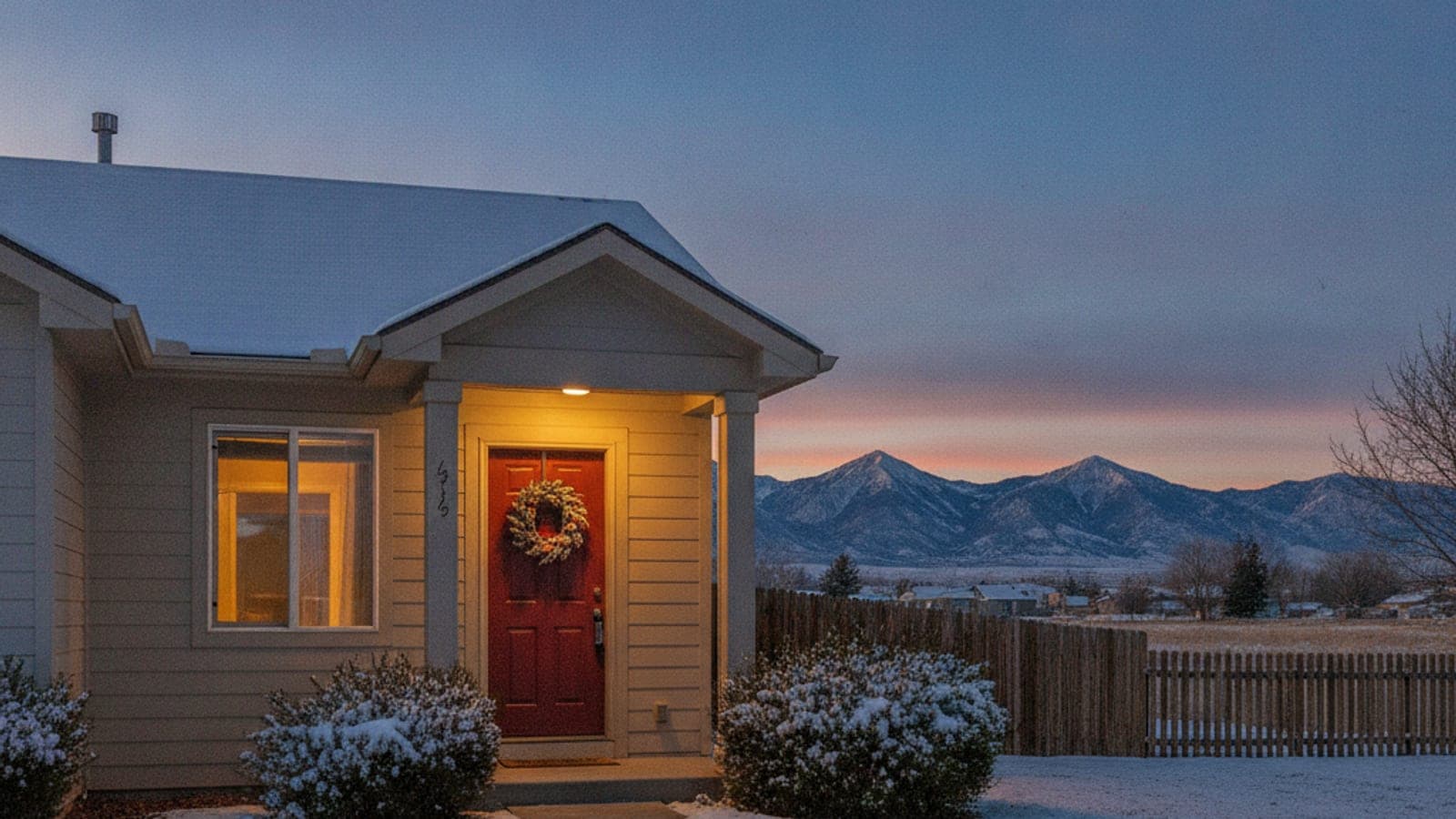
How to sell a house fast in a slow market comes down to four levers: price, condition, presentation and certainty. A listing wins on the first three if you can wait and prepare the house. A cash sale wins on the fourth, because no lender can fall through. Pick the lever that matches your deadline.
How do you know the market is slow where you are in Utah?
You know the market is slow when houses like yours take longer to sell, cut their prices on the way, and lose buyers whose financing does not hold. Those three signs matter more than any headline about Utah as a whole, because Sandy, St. George and Logan can be in different markets in the same month.
Two public numbers put a figure on it. The St. Louis Fed's FRED database publishes Realtor.com's median days on market for Utah, 65 days in August 2026, and its monthly count of Utah listings with a price cut, 6,368 the same month. Read them as context, not a forecast; our older Salt Lake City market snapshot shows how fast a market photograph goes out of date.
Closer to home, ask your agent how long similar houses within a mile took to go pending in the last 90 days, how many cut their price first, and how many came back after a failed contract. If the answers are "over 60 days", "most" and "a few", your market is slow.
How much does a price cut speed up a sale compared with waiting?
A real price cut, one that moves the house into the next band of buyers, usually does more in two weeks than two months of waiting did. Buyers search in brackets. A house listed at $520K is invisible to everyone whose search stops at $500K, and in a slow market those are the buyers still looking.
Suppose a West Jordan house has been listed at $520K for 75 days with two showings a week and no offers. The owner has two honest options. Option one: cut to $490K, which puts the house in front of new buyers and signals that the seller has stopped waiting for 2021. Option two: take a cash offer and close inside the month. The cash number will be lower than $490K, and the right comparison is net proceeds, not headline price: subtract the commission, the seller's closing costs, the repairs an inspector will find, and every month of mortgage, taxes, insurance and heating while the house sits. We set that arithmetic out row by row on cash buyer vs realtor.
For most West Jordan houses in decent shape, option one nets more. The cut costs $30K on paper, but the house still sells to a retail buyer, and a well-priced house sells in any market. Waiting is the expensive choice: more carrying costs, more showings, and a listing history buyers can read.
Which repairs and staging pay back in a slow market, and which do not?
The repairs that pay back are the cheap ones buyers can see from the doorway: paint, carpet, lights, a cleared yard, working fixtures. The ones that do not are the big-ticket jobs a buyer would rather price than inherit: a roof, a furnace, a foundation, a kitchen remodel done to your taste rather than theirs. In a slow market the gap widens, because buyers have time to be picky.
Here is how the levers compare, which is how to sell a house fast in a slow market, on one screen.
| Lever | Listing with an agent | Cash sale |
|---|---|---|
| Price | Highest, if priced against closed sales, not hopes | Below retail, always, and we say so |
| Condition | Paint, carpet and a clean yard pay back; a roof usually does not | Priced into the offer, nothing repaired |
| Presentation | Staging, photographs, weeks of showings | One walkthrough, no cleaning, no staging |
| Certainty | Depends on the buyer's loan, appraisal and inspection | No lender, no appraisal, no inspection contingency |
| Days to close | 45 to 60 after an offer, plus the days on market first | 7, or your date |
| Best fit | A house in decent shape, a seller who can wait | A house that needs work, a seller who cannot |
Staging follows the same rule. Decluttering, a deep clean and good photographs are cheap and worth it. Nothing about presentation rescues a wrong price.
When does a cash offer beat a price cut?
A cash offer beats a price cut when certainty is worth more to you than the last few percent, or when the house cannot pass a buyer's inspection without repairs you cannot fund. Those are the two cases, and they are narrower than a cash buyer's website usually admits.
The first case is the clock. A job start in another city, a lender's deadline, a probate distribution, a divorce settlement date: when the sale has to close by a date, a listing can only promise to try. Even after an offer, a financed sale runs 45 to 60 days and can still fail at appraisal or underwriting, and in a slow market it fails more often, because low appraisals and nervous buyers are what slow markets are made of. A cash sale removes that risk: a written offer within 24 hours, no appraisal, and a closing in about 7 days or on the day you choose.
The second case is condition. If the house needs a roof or a furnace, or has water damage nobody fixed, a retail buyer's lender may not approve the loan at all. A price cut does not fix that; it attracts buyers who will discover it and walk. A cash buyer prices the work into the offer and buys the house as it stands. The trade, put plainly in our post on the pros and cons of a cash offer, is a lower price for a sale that closes.
If neither case fits you, the price cut is the better answer, and we would rather say so now than after you have called.
How long should you wait before changing course?
Two weeks with no showings, or 30 days with showings and no offers, is long enough to know the price is wrong. Past 60 days the listing itself works against you, because every buyer can see the day count and reads it as a flaw in the house, not the price.
That gives a simple sequence. Days 1 to 14: nobody through the door means buyers are not searching in your bracket, so the first cut should be a real one, not $5K. Days 15 to 45: showings but no offers means buyers like the photographs and not the house, so fix what they mention. Day 60 and beyond: decide whether you are selling a house or holding one. If the house is sound and you can wait out the season, hold the listing at a corrected price. If you cannot, this is when a cash offer stops being a discount and becomes a way out.
Decide it on a date you set in advance. The sellers who lose the most are the ones who never chose, and let a listing drift from 60 days to 200.
What do the winter months do to selling along the Wasatch Front?
Winter thins both sides of the market along the Wasatch Front. Fewer sellers list from November through February, because nobody wants strangers in the house at Christmas, and fewer buyers look, because moving in snow is miserable and the school year is half done. The listings that stay up compete with less, and the buyers out in January are usually serious.
For a stalled listing that changes the maths a little. A house that did not sell in September at the wrong price will not sell in December at the same price, but one cut to the right price in November can catch a serious winter buyer with little competition. Expect the wait to stretch over the holidays, and budget for the heating bill on an empty house, which in Ogden or Layton is real money.
If waiting until March is not an option, a cash sale does not care about the season. We buy in January the same way we buy in June.
Questions people ask
Why is my house not selling?
Price, almost always. When selling a house in a slow market, the one that is not moving is usually priced against what neighbours listed at rather than what they closed at, and buyers can see the difference in the public record. After price come condition buyers can see in the photographs and a listing up long enough to look stale.
Should I take my house off the market and relist?
It depends. Relisting resets the day count on some portals, but any buyer's agent can see the full history, and a relist at the same price fools nobody. It is worth doing if you are also changing something real: a proper price cut, new photographs after repairs, or a spring relist after a winter pause.
Is winter a bad time to sell in Utah?
Not for a well-priced house. There are fewer buyers along the Wasatch Front from November to February, but also fewer listings, and the buyers who are out are serious. An overpriced listing will not be saved by any season. A correctly priced one can sell in January.
How much lower is a cash offer in a slow market?
It depends on the house, and a percentage would be wrong for yours. The offer starts from what comparable houses actually closed at, subtracts repairs at contractor prices, and subtracts our cost to hold and resell in the same slow market you are in. A slow market lowers both the retail number and the cash number. It does not lower the certainty, which is the point of the trade.
Can I get a cash offer while the house is listed?
Yes. Read your listing agreement first, because most Utah agreements entitle the agent to a commission on any sale during the listing period, including a cash one, and some carry that right for a while after it ends. Tell your agent you are getting a number. A written cash offer is a useful benchmark for your next price decision even if you never accept it.
If your house is in decent shape and you can hold on until spring, a price cut and a good agent will usually net you more than we will, slow market or not. A cash sale is for the seller who cannot wait, or the house that cannot pass an inspection. If you want the second number to set against the first, request a cash offer; it is free, in writing, and a benchmark whether or not you ever sell to us.
Find out what your house is worth in cash. Free, and no strings.
One phone call, or one short form. You'll have a real number by this time tomorrow.
Tell us about the house
Where the house is, your name, and a number we can reach you on. We call back within one business day, and you're free to say no.