
Guide · September 18, 2026 · 8 min read
Selling a house during a divorce in Utah: timing, consent and cost.
The house is usually the largest thing you own together and the slowest thing to divide. Here is how the sale actually works, and when a cash sale is the wrong tool for it.
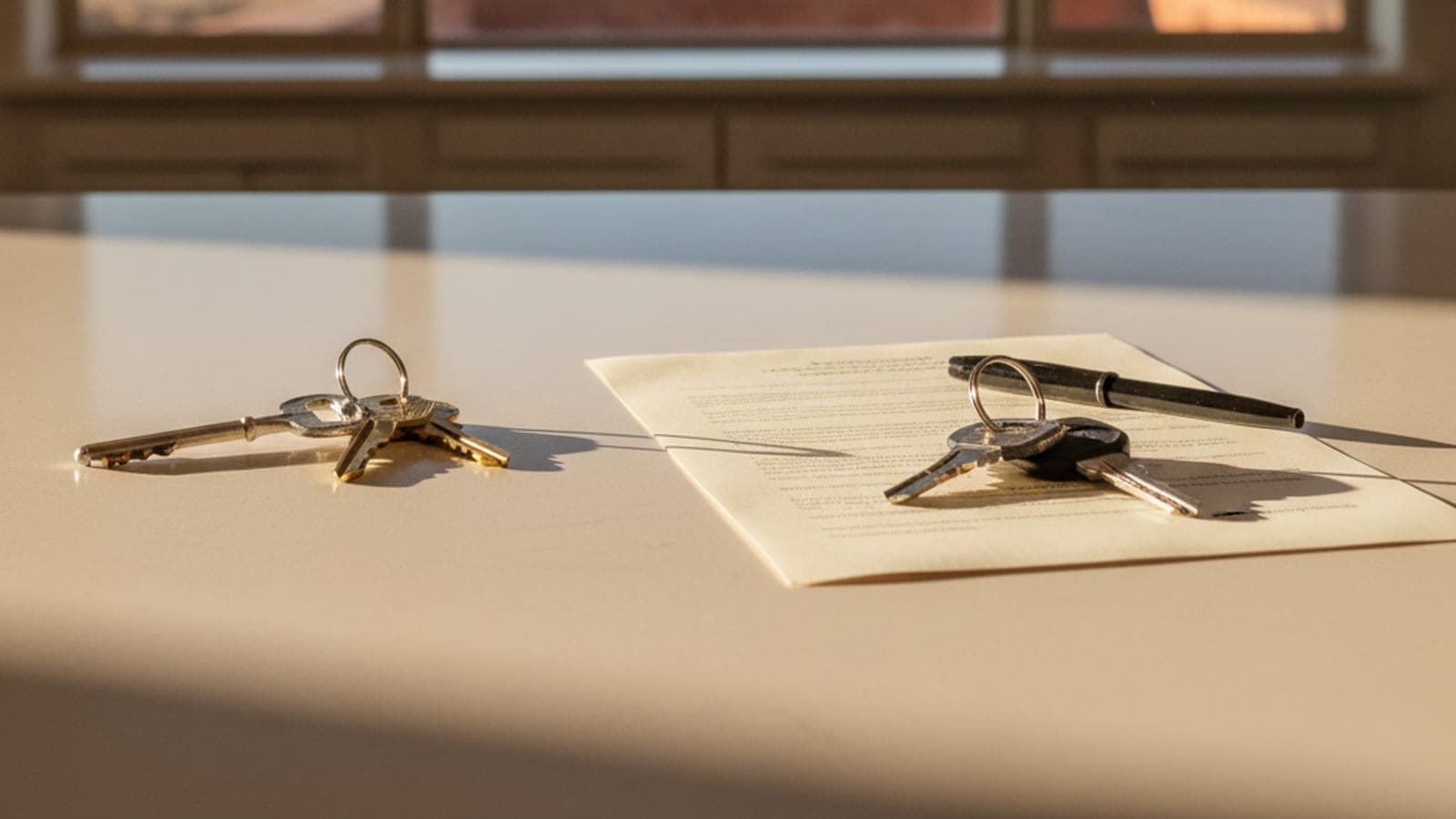
Yes, you can sell a house during a divorce in Utah. Both spouses on title have to sign, and once a case is filed the court can control when the sale happens and where the money waits. A temporary order or the final decree sets those terms. The sale itself works like any other.
Can you sell a house during a divorce in Utah before the decree is final?
Yes, if both of you agree to it in writing, or if the court orders it. The day a petition is filed, Utah Rule of Civil Procedure 109 generally enters an automatic domestic relations injunction: neither spouse may transfer, encumber, conceal or dispose of property without the other's written consent or a court order. Before filing, the two of you can sell whenever you like. After filing, a sale generally needs a written agreement between the spouses, usually folded into a stipulation the court signs, or an order from the judge.
Selling property before the divorce settlement is common when neither spouse can carry the mortgage alone, or when the equity is the only cash either of you will have to start over. The proceeds do not have to be divided the day you close. In most cases the title company holds the net in escrow, or the decree says how the wire is split, and the money waits until the judge signs. Confirm the exact mechanics with your Utah attorney, because a sale that ignores a standing order can be undone.
Utah's courts publish a plain-language page on how property is divided in a divorce.
Who has to sign when a married couple sells a Utah house?
Everyone on the deed signs. If both names are on title, both spouses sign the purchase contract and the closing documents, and the title company will not record a deed with one signature missing. Marriage alone does not put a spouse on title, but once a divorce is filed the Rule 109 injunction covers property of either party, and title companies generally want the other spouse's written consent or a court order before they will close on a house titled to one person.
A spouse who refuses to sign can stall a sale for months. That is the most common reason a divorce sale runs past the decree. The fix is a court order, covered below, or a mediated agreement that trades the signature for something else in the settlement.
What does it cost to sell a house during a divorce, and who pays it?
The same costs as any sale, plus the cost of time. Take a $500K house as an example, listed with an agent while the case is pending. Suppose the agreed commissions come to 5%, which is $25K. Add the repairs the buyer's inspector asks for, and the mortgage, taxes and insurance for every month the house sits listed. Three months of a $2,800 payment is another $8,400, and one of you is paying it while living somewhere else.
Who pays is a settlement question. In most cases the costs of sale come off the top before the proceeds are divided, so both spouses share them in the same proportion the court sets for the equity.
A cash sale removes the commission, the repairs and most of the carrying time, but it trades them for a lower price. Our offer is a fair price for the house as it stands, below what a calm listing would fetch, and we say that plainly. Our cash buyer versus realtor page lays the two columns side by side with real numbers so you can see which one nets more for your house.
What happens when a Utah court orders the house sold?
The judge sets the terms and the sale goes ahead whether or not both spouses like it. Under Utah Code 81-4-406, the divorce decree can include any equitable orders relating to the parties' property, debts and obligations, and the court can order a sale in the decree, or by temporary order while the case is pending. Ordering the marital home sold and the proceeds divided is one of the most ordinary orders a Utah divorce court makes. Older articles cite it as Utah Code 30-3-5; Utah moved its divorce statutes into Title 81 in 2024.
A court ordered sale of a house in divorce usually names a listing agent or a method of sale, a floor price or a way to set one, a deadline, and what happens to the net. If a spouse still will not sign, the court can authorize a commissioner or the other spouse to sign on their behalf. That step is slow and expensive, so most people settle before it.
Timing is where the order bites. Take a Sandy couple, hypothetically, whose decree gives them 90 days to sell a $450K house and split the net. A listing needs photos, showings, an accepted offer, an appraisal and a buyer whose loan survives underwriting. If the first buyer's financing falls through at day 60, the couple is back to the judge asking for more time. A cash sale closes on a date you pick, in about 7 days or in 60, because there is no lender in the chain. It is not the better price. It is the date-certain option, which is sometimes what a decree needs.
How do a listed sale and a cash sale compare on a divorce timeline?
Most searches for sell house during divorce are really about the calendar. The listed sale usually wins on price. The cash sale usually wins on the calendar and on the number of decisions two people who are not speaking have to make together.
| Question | Listed sale | Cash sale |
|---|---|---|
| Written offer | After listing, showings and negotiation, often weeks | Within 24 hours of the walkthrough |
| Days to close | 45 to 60 after an accepted offer, subject to the buyer's loan | About 7, or the date the decree needs |
| Repairs before closing | Usually some, negotiated after inspection | None, the condition is priced into the offer |
| Showings and cleaning | Ongoing, with both spouses coordinating access | One walkthrough |
| Commissions and fees | Agreed commissions plus closing costs | No fees or commissions |
| Sale price | Closest to retail for a house in good shape | Fair, but below retail |
| Risk the sale falls through | Real, mostly financing and appraisal | Low, no lender contingency |
| Joint decisions required | Many: price, offers, repairs, dates | Two: accept the number, pick the day |
If the house is in decent shape, both of you are cooperating, and the decree gives you a few months, list it. That is the honest answer and we say it on the phone too. If the house needs work, one spouse has already moved out, or the deadline is closer than a lender can move, the cash column is the one to price.
How are the proceeds split when one spouse paid more toward the house?
Equitably, which in Utah means fairly and not always equally. The court looks at the whole marriage, not just who wrote the bigger check. In a long marriage the split is often close to 50/50 regardless of whose paycheck covered the mortgage. In a short marriage, or where one spouse brought the down payment from savings or an inheritance they owned before the wedding, a judge may treat that contribution as separate and give it back before dividing the rest.
The title company disburses the net the way the decree or stipulation tells it to, and if the split is still contested the money generally sits in trust until it is not. For your own figures, sit down with a Utah family law attorney. This is not legal advice.
Questions people ask
Can I sell the house before the divorce settlement?
Yes, with your spouse's written agreement or a court order. The proceeds are usually held by the title company or split according to a temporary order until the decree is final.
What if my spouse refuses to sign?
Then the house does not sell until a judge gets involved. You can ask the court for an order compelling the sale, and in stubborn cases the court can authorize someone to sign in the refusing spouse's place. Mediation is faster and cheaper than that hearing, and Utah generally requires at least one session in a contested divorce anyway.
Can a Utah court force the sale of our house?
Yes. The decree can include any equitable order about the parties' property, and ordering the marital home sold is one of the most common. The court can also set the method, the deadline and how the net is divided. A temporary order can decide who lives in the house while the case is pending.
How do we avoid selling the house in a divorce?
One spouse keeps it and pays the other for their share. That usually means refinancing the mortgage into one name and paying the buyout from the new loan or other assets. It only works if the spouse who stays can qualify alone and the other agrees on the value. If neither of you can, the sale is the practical answer, and the only question left is which kind.
Is Utah a community property state?
No. Utah is an equitable distribution state, so the court divides marital property fairly rather than by an automatic 50/50 rule.
Does a cash sale close faster than a listing during a divorce?
Yes, in most cases. A cash buyer has no lender, so there is no appraisal, no underwriting and no financing contingency to wait on. We close in about 7 days when the decree needs it, or on a later date the two of you pick. A listing typically needs 45 to 60 days after an accepted offer, plus the weeks it took to get that offer.
If the house is sound, you and your spouse can still cooperate, and the calendar has room, listing with an agent will usually put more money on the table to divide, and no cash buyer changes that arithmetic. A cash sale is for the other cases: a decree deadline, a house that needs work, or two people who need to be done making joint decisions. Either way, request a cash offer. It is in writing, it costs nothing, and it gives you both a firm number to put beside the listing estimate, even if you never sell to us.
Find out what your house is worth in cash. Free, and no strings.
One phone call, or one short form. You'll have a real number by this time tomorrow.
Tell us about the house
Where the house is, your name, and a number we can reach you on. We call back within one business day, and you're free to say no.