
Guide · October 18, 2026 · 11 min read
A small estate affidavit in Utah collects the bank account, not the house.
The form is short and no judge reads it, but it stops at the front door. The last recorded deed decides what moves the house instead, and how soon.
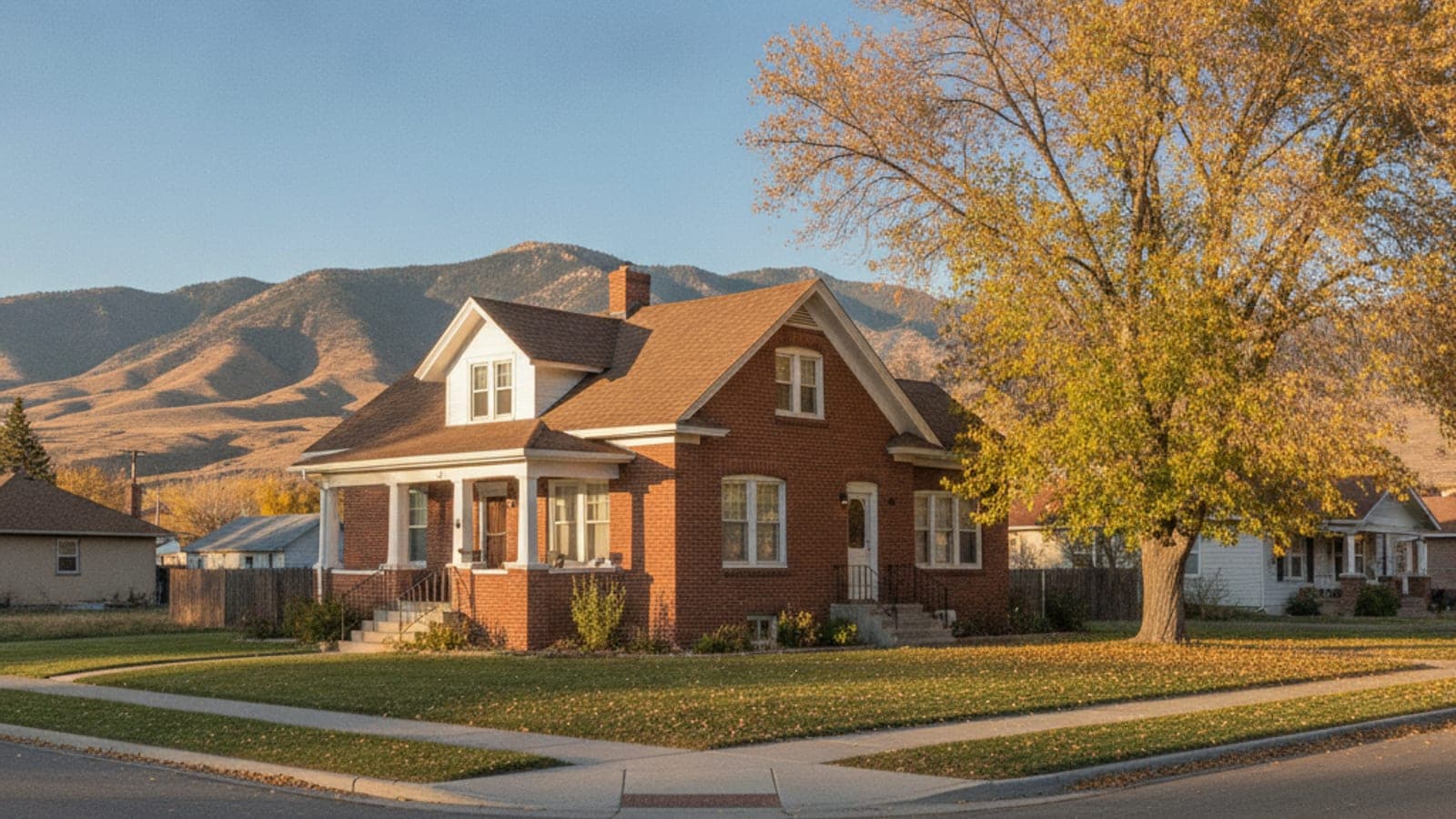
No. The small estate affidavit Utah law allows collects personal property, such as a bank account, when the estate is worth $100,000 or less after liens and 30 days have passed since the death. It cannot transfer a house. A house moves by a joint tenancy affidavit, a transfer on death deed, a trust, or probate.
Can you use a small estate affidavit to transfer a house in Utah?
No. The Utah Courts page on small estates says a small estate affidavit “cannot be used to transfer title to real property like land or a house,” and lists “there is no real property” as a condition for using one at all.
The statute, Utah Code 75-3-1201, tells whoever owes the person who died money, or holds their belongings, to hand it over. It says nothing about deeds, and Utah has no house version of the form to find under “utah small estate affidavit real estate” or any other name. The courts’ informal probate page says probate is required when the estate includes real property “of any value.”
What families tend to miss is that the house still counts toward the $100,000, even though the affidavit cannot reach it. A house in Mom’s name alone with more than $100K of equity puts the whole estate over the limit, and then the affidavit cannot collect her checking account either. A house that passed by joint tenancy, a transfer on death deed or a trust generally sits outside that estate, so the affidavit can still collect the bank account while another document moves the house.
What does the Utah small estate affidavit collect, and who signs it?
It collects money owed to the person who died and belongings someone else is holding, and the successor signs it in front of a notary. Under 75-3-1201, you can use it only if:
- The entire estate subject to administration, wherever located, less liens and encumbrances, does not exceed $100,000.
- At least 30 days have passed since the death.
- No petition to appoint a personal representative is pending or granted anywhere.
It reaches bank balances and other money owed, belongings, and stock, which a transfer agent re-registers on the affidavit. Up to four boats, cars or trailers go through the Motor Vehicle Division on a separate affidavit. Shares in a water company are excluded, which matters for a Utah house that came with irrigation shares.
A successor is anyone, other than a creditor, entitled to the property under the will or Utah’s inheritance rules (Utah Code 75-1-201). The court form, Affidavit for Collecting Personal Property in a Small Estate Proceeding (1110XX), lets a successor or their authorized agent sign, and nothing is filed with a court. A bank that pays on the affidavit is released, and one that refuses can be ordered to pay, with damages of up to three times the value (Utah Code 75-3-1202). Whoever collects stays answerable to anyone with a better right.
Which routes move a house without probate in Utah?
Three: joint tenancy with a surviving owner, a transfer on death deed recorded before the death, and a trust that holds the deed. Each depends on paperwork signed in life, so start by pulling the last recorded deed from the county recorder.
| Route | What it covers | Moves a house? | How soon | Court |
|---|---|---|---|---|
| Small estate affidavit (75-3-1201) | Bank accounts, belongings, stock, up to 4 vehicles; estate of $100,000 or less after liens | No | 30 days after the death | None |
| Joint tenancy affidavit (57-1-5.1) | A house held in joint tenancy or a life estate | Yes, to the survivor | Once you have the death certificate | None. Recorded with the county |
| Transfer on death deed (75-6, Part 4) | A house whose owner recorded the deed before death | Yes, to the beneficiaries | Once the affidavit is recorded | None, unless debts go unpaid (12-month window) |
| Trust (Title 75B) | Whatever was deeded into the trust | Yes, by the successor trustee | Set by the trust | None, ordinarily |
| Informal probate (75-3, Part 3) | Everything in one name alone | Yes, by the personal representative | Filed from 120 hours after death; months to finish | A registrar, no hearing |
| Formal probate (75-3, Part 4) | The same, when someone objects | Yes, once appointed | The longest | A judge and a hearing |
Joint tenancy. When one joint tenant dies, the survivor owns the whole house. Under Utah Code 57-1-5.1 the survivor records an affidavit that cites the deed by entry number, book and page, gives the legal description, and attaches the death certificate. The statute prints the model form, so the joint tenancy affidavit Utah recorders take is about a page long, and the same affidavit clears a life estate. It only helps at the first death: when the survivor dies owning the house alone, it needs another route.
Transfer on death deed. The transfer on death deed Utah adopted in 2018 names who gets the house at death, while the owner can still sell, mortgage or revoke it in life (75-6-406 and 75-6-412). It must be recorded before the owner dies (75-6-409). Afterwards the beneficiary records an affidavit in the 57-1-5.1 form with the death certificate, and the house is theirs, subject to any mortgage (Utah Code 75-6-413). Two beneficiaries take equal shares unless the deed says otherwise, so both sign to sell.
Trust. A trust covers only what was deeded into it. If the deed names Mom as trustee, the successor trustee can sell without a court, unless the trust limits it (Utah Code 75B-2-814), and gives the title company a certification of trust instead of the whole document (75B-2-1013). If the deed still names her personally, the trust does not hold the house.
When does the house need probate, and how fast can it go?
When the house was in the deceased person’s name alone, with no transfer on death deed and no trust holding the deed. The fastest court route is informal probate, which needs no hearing when the family agrees.
- Filing. Once 120 hours (five days) have passed since the death, in the district court for the county where the person lived.
- Appointment. With written waivers from everyone entitled to notice, the registrar can appoint at that point; without them, 10 days after notice (Utah Code 75-3-307).
- Authority to sell. Letters testamentary (with a will) or letters of administration (without one) let the personal representative sell land, at a public or private sale, unless the will or a court order restricts it (Utah Code 75-3-714).
- Creditors. Publishing notice is optional; if published, creditors have three months from the first publication to claim (Utah Code 75-3-801). The house can often sell inside that window, while the heirs’ money waits.
- The outer limit. Informal probate must start within three years of the death (75-3-107); our post on whether there is a time limit on selling inherited property covers the rest.
A written objection turns it into formal probate, litigation with notice and a hearing (Utah Code 75-3-401), and the courts’ informal probate page says the parties then go to mediation.
Utah also has a summary procedure for small estates, but it runs inside a probate case. Under Utah Code 75-3-1203, if the estate after liens is worth no more than the family allowances plus administration costs, the funeral and last-illness medical bills, an appointed personal representative can distribute at once without notice to creditors. The allowances include $22,500 for a surviving spouse or minor children (Utah Code 75-2-402) and $15,000 of exempt property such as furniture and cars (75-2-403). A heavily mortgaged house can fit; a paid-off house rarely does.
The sale itself is on our page about selling an inherited home during probate.
What does this look like for two houses in Logan?
One recorded deed makes a difference of months. Take two hypothetical Logan neighbours, each with a paid-off house worth about $380K and $20K in checking. The names and figures are examples, not a real estate or a sale of ours.
Ruth and her husband held their house as joint tenants. When he died she recorded a joint tenancy affidavit, then a transfer on death deed at the Cache County Recorder naming her son and daughter. Carol, next door, owned hers alone, with a will naming her daughter as executor.
| Step | Ruth: transfer on death deed | Carol: house in her name alone |
|---|---|---|
| The house | Her children record an affidavit with the death certificate. It is theirs, in equal shares | Stays in Carol’s name until a personal representative is appointed |
| The $20K account | After 30 days, a small estate affidavit to the bank; the house does not count | No affidavit; the house puts the estate far over $100,000 |
| Court | None | Informal probate in Cache County, filed no sooner than 120 hours after the death |
| Who signs a sale | Both children | Her daughter, once letters are issued |
| Time pressure | Little. Keep it, rent it or list it in spring | Taxes, insurance and utilities run while the case moves, usually for months |
At an example $600 a month in taxes, insurance and utilities, Ruth’s children pay on a schedule they choose. Carol’s daughter pays for every month the court part takes, before she can sign anything.
When does selling an inherited house for cash make sense?
Less often than you might expect. If the house came by joint tenancy, a transfer on death deed or a trust, no probate is needed, so the family has time to clear it, decide whether to keep it, and list it with an agent. On a house in decent shape, a listing usually nets more than a cash offer, and we say that on the phone too.
A cash sale makes sense when:
- The heirs need speed, because nobody can keep paying the carrying costs.
- The heirs cannot agree, and one written number gives everyone the same figure to answer. Our post on selling inherited property with multiple owners covers an owner who will not sign.
- The house needs work nobody can fund, such as a roof or a furnace, which a listing expects paid first.
When it fits, we make a written cash offer, typically within 24 hours, with no commission, fees, repairs or cleaning, and we pay the closing costs on our purchases. Closing can be in as little as 7 days once someone has authority to sign, or on a later date you pick. Tax on the sale is in our post on taxes when you sell an inherited house. Our Logan page covers what older Cache Valley houses tend to need.
Questions people ask
Does the house count toward the $100,000 limit?
Yes, if it is part of the estate. The limit covers the entire estate subject to administration, less liens, so a house in the deceased person’s name alone counts at its value minus the mortgage. A house that passed by joint tenancy, a transfer on death deed or a trust generally sits outside that estate.
What happens to a house held in joint tenancy when one owner dies?
The survivor owns it outright, without probate. They record the joint tenancy affidavit Utah law describes in 57-1-5.1, citing the deed, the legal description and the death certificate. When the survivor later dies owning it alone, the house needs a transfer on death deed, a trust or probate.
Can a will override a transfer on death deed in Utah?
No. Under Utah Code 75-6-411, a recorded transfer on death deed is revoked only by a later instrument recorded before the death: a new transfer on death deed, a recorded revocation, or a deed conveying the house. A will is not on that list, so a transfer on death deed Utah owners record stands against a later will. If the two conflict, talk to a Utah probate attorney.
Can you sell a house right after inheriting it by transfer on death deed?
Usually, once the affidavit and death certificate are recorded. Every beneficiary signs, and the mortgage is paid from the sale. Because the estate can reach the house for unpaid debts through a probate case started within 12 months of the death (Utah Code 75-6-415), ask the title company early how it handles a sale in that first year.
Do you need a lawyer for a small estate affidavit in Utah?
Not to use the form: it is notarized and handed to the bank, and nothing goes to a court. A Utah probate attorney is worth the call when there is a house in the deceased person’s name, a dispute among heirs, or debts that may be larger than the estate. The Utah Courts site lists free legal clinics for people who cannot pay for one.
If the house passed by joint tenancy, a transfer on death deed or a trust, you have time, and on a house in decent shape an agent will usually net you more than we would. If it needs probate and nobody can carry it, the heirs cannot agree, or it needs work nobody can fund, get your cash offer: a written number, typically within 24 hours, and you are free to say no.
Find out what your house is worth in cash. Free, and no strings.
One phone call, or one short form. You'll have a real number by this time tomorrow.
Tell us about the house
Where the house is, your name, and a number we can reach you on. We call back within one business day, and you're free to say no.