
Guide · October 18, 2026 · 11 min read
What is a real estate wholesaler? Ask whose name goes on the deed.
A wholesaler signs a contract to buy your house, then sells that contract to the investor who actually closes. It can be a fair deal for a seller. Before you sign, find out who you are signing with.
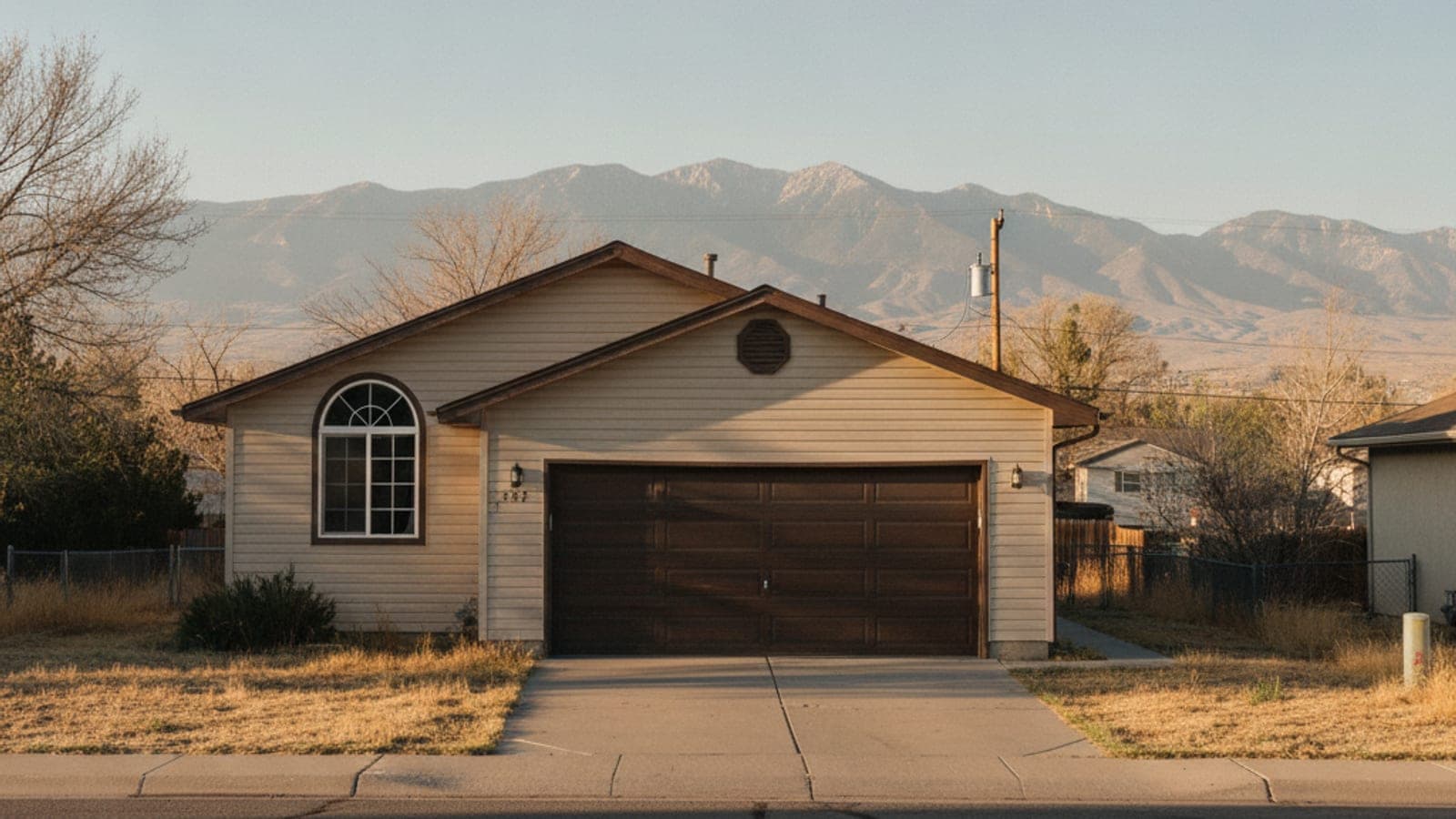
What is a real estate wholesaler? A person or company that signs a contract to buy your house and then, before closing, sells that contract to an investor for a fee, or buys and resells the house the same day. The investor’s money pays you, and the wholesaler keeps the gap between the two prices.
Assigning a contract is legal in Utah, and some sellers are well served by a wholesaler. To find out who you are really signing with, ask one question: will your company’s name be on the deed at closing?
What is a real estate wholesaler, and how does one get paid?
A wholesaler is a middleman between you and the investor who buys the house, and it is paid from the gap between your price and the investor’s. It signs a contract with you and offers it to the investors on its list, in one of two ways:
- Assignment of contract. You sign a purchase contract with the wholesaler. The wholesaler signs a separate agreement with an investor, who pays it an assignment fee and takes its place in your contract. At closing you deed the house to the investor, a name you may never have heard.
- Double closing. The wholesaler buys your house and resells it to the investor, usually the same day. That makes two sales, each with its own closing statement and deed, and the wholesaler’s margin sits on the second statement, which you are not a party to.
The Utah Division of Real Estate described the business in a 2018 newsletter article by one of its investigators: the “buyer” offers the seller cash, markets the signed contract to an investor, and collects the assignment fee at or after closing. The Division had seen fees as high as the equivalent of a 30% commission.
What is the difference between a wholesaler, an iBuyer and a cash buyer?
The difference is whose name goes on the deed and who sets the price. Ask any company “will your company’s name be on the deed at closing?” and the answers sort them:
- A direct cash buyer says yes. It buys with its own money, in its own name, then repairs and resells or rents the house.
- An iBuyer says yes, at whatever price is left after its inspection. It prices houses with software and charges a service fee. We set the two side by side on cash buyer vs iBuyer.
- A wholesaler says no, it will be an investor’s name. Or yes, for a few hours, in a double closing.
| Compare | Direct cash buyer | iBuyer | Wholesaler |
|---|---|---|---|
| Name on the deed from you | Its own | Its own | An investor’s, or its own for a few hours |
| Whose money pays you | Its own | Its own | The investor’s |
| How the price is set | Nearby sales and the repairs, after a walkthrough | Software, then an inspection | What it expects an investor to pay, less its fee |
| Can the price change before closing? | It should not if condition was priced in, so ask | Yes, after the inspection | Often, if no investor will pay the price plus the fee |
| Fees from your side | Ask for a list; on our purchases, none | A service fee and repair deductions | None by name; its fee comes from the investor’s budget |
If the choice on your kitchen table is wholesaler vs cash buyer, look at the first and fourth rows. A direct buyer’s number is a price at which it has decided to buy, and a wholesaler’s is a price at which it hopes someone else will.
Is wholesaling legal in Utah?
Assigning a purchase contract is legal in Utah, but the Division of Real Estate has said that making a business of it without a real estate license is not. Utah’s real estate statutes do not name wholesaling: neither the licensing act, Title 61, Chapter 2f, nor Title 57, the real estate title of the code, uses the word, so the general licensing law applies:
- The license rule. Utah Code 61-2f-201 requires a license for anyone who, for valuable consideration, buys, sells or exchanges real estate for another person, or offers to, even once.
- The owner exemption. Section 61-2f-202 lets an owner deal in its own property without a license. It says “owner” does not include someone holding only an option to purchase, and it does not cover ownership taken to get around the licensing law.
- The Division’s view. The 2018 article said a purchase contract is an interest in the contract, not ownership, so the owner exemption does not apply, and when selling contracts becomes a business model the Division “views this conduct as unlicensed real estate sales activity.” It reasons from the principal broker definition, now 61-2f-102(30): someone who sells or lists real estate, expecting to be paid.
- Licensed agents. The same article said an agent who is the buyer on your contract has to disclose being licensed and a principal, and cannot also represent you.
You can check anyone’s Utah license on the state’s license search, and the Division asked people aware of the practice to report it through its complaint page. Whether a particular deal crosses the line is for the Division or a Utah real estate attorney to say. We are not lawyers; this is what the rules say, not advice on your contract.
What does Utah’s standard purchase contract say about assignment and earnest money?
It says the buyer cannot assign the contract without your written consent. Section 19 of the state-approved Real Estate Purchase Contract (the REPC, effective December 4, 2024) makes the contract personal to the buyer. The one exception is a transfer to a company or trust the buyer holds a legal interest in, and “and/or assigns” after the buyer’s name counts as consent only to that, not to selling the contract to a stranger. The REPC also lets the two sides agree to a different form, and the Division noted that wholesale contracts are often simple two-page forms that let the buyer market the house.
For earnest money, the REPC has the buyer deliver it within 4 calendar days of acceptance, and the buyer gets it back on cancelling by the due diligence deadline (Section 8.1). After that, on a cash offer with no financing or appraisal condition, it is non-refundable, and if the buyer defaults you can keep it as liquidated damages (Section 16.1). A $500 deposit with a 30-day inspection window, for example, gives any buyer a month to find an investor at no cost, while your house sits off the market.
Where does the assignment fee sit on a $400K West Jordan house?
It sits between what the investor pays and what you get. In this example an investor who closes can pay about $300K, so a wholesaler who wants a $15K fee has to sign you at about $285K.
The house is a hypothetical 1980s split-level in West Jordan. Repaired, houses like it nearby have closed at about $400K, and this one needs a roof, a furnace and flooring, about $40K of work. The numbers are round examples. None is a quote or our pricing.
| Line | Direct cash buyer | Wholesaler, by assignment |
|---|---|---|
| What repaired houses nearby closed at | $400K | $400K |
| Repairs | -$40K | -$40K, paid by the investor |
| Holding, then commission and closing costs on resale | -$40K | -$40K, paid by the investor |
| Margin of the company that closes | -$20K | -$20K, the investor’s |
| Most the closing buyer can pay | $300K | $300K |
| Assignment fee | None | -$15K, to the wholesaler |
| Price on the contract you sign | $300K | $285K |
A wholesaler’s first offer can be higher than $285K, even higher than the direct buyer’s $300K, because it is not yet a real offer. Say the contract says $310K. To be paid, the wholesaler needs an investor to pay $325K. If one does, perhaps a landlord who runs thinner numbers on a rental, you get your $310K and have done better than the direct offer, and that does happen.
If no investor will pay $325K, the wholesaler has three moves inside the inspection window. It can ask you to come down, often to about $285K, or cancel and take its earnest money back. It can also cut its fee, and that is the only one of the three that gets you the number you signed. A double closing runs the same sum: you sell to the wholesaler for $285K, it sells to the investor for $300K that afternoon, and the $15K sits on a statement you never see.
When is a wholesaler a fair choice, and when does an agent beat all three?
A wholesaler is a fair choice when it says up front that it will assign the contract, puts real earnest money with a title company, and offers a price you would take from anyone. An agent beats all three when the house is in decent shape and you have time to wait.
A wholesaler with a long list of investors can find a buyer for a house one company would pass on, and if the sale closes at the number you wanted, the fee is the investor’s cost, not yours. When it goes wrong for a seller, the usual reason is that they did not know a wholesaler was involved until two weeks before closing.
If the house is in decent shape and you can wait three months, an agent will usually net you more than any of the three, us included, even after commission. The agent is also the only one paid to be on your side of the table. We say that on the phone too, and the line-by-line sum is on cash buyer vs realtor. A cash sale earns its discount when the house needs work you cannot fund, a court or lender has set the date, or no lender will finance it as it stands.
Questions people ask
What is an iBuyer?
An iBuyer is a company that prices houses with software and buys them in its own name, without listing them, then resells them. The name is short for instant buyer, because the first number can come back the same day. It charges a service fee, can lower the price after its inspection, and buys mostly newer houses in good condition in the areas it covers.
Does a wholesaler need a real estate license in Utah?
It depends on what the wholesaler is doing, and Utah’s real estate statutes do not answer it by name. Assigning a contract is legal, but the Utah Division of Real Estate said in 2018 that selling purchase contracts as a business model is unlicensed real estate sales activity, because a contract is not ownership and the owner exemption in Utah Code 61-2f-202 does not apply. You can check anyone’s license on the state’s license search.
Can a buyer assign my Utah purchase contract without telling me?
Not on Utah’s state-approved purchase contract. Section 19 of that contract, the REPC, says the buyer cannot assign it without your prior written consent, except to a company or trust the buyer holds a legal interest in, and “and/or assigns” consents only to that. On a buyer’s own form the rules are whatever that form says, so read the buyer line and any assignment clause before you sign.
How much earnest money should a cash buyer put down?
There is no standard amount; Utah’s state-approved purchase contract leaves it blank for the buyer and seller to agree. Two things matter as much as the amount: who holds it, a title company or a brokerage trust account, and the date it stops being refundable, which on that contract is the due diligence deadline. A small deposit with a long inspection window lets any buyer walk away for free.
How can you tell whether a buyer is a wholesaler?
Ask whose name will be on the deed at closing, then read the contract for an assignment clause. Utah’s state-approved purchase contract, in section 19, does not let the buyer assign it without your written consent, except to a company the buyer has a legal interest in, so a contract that adds a broader right to assign is a sign the buyer may sell it on. You can look up a company and its people in the Utah Division of Real Estate license search, and our companies that buy houses page lists the other questions worth asking any buyer, us included.
A wholesaler is not a scam, just a middleman whose number holds if an investor agrees with it, and some sellers do well with one. If the house is in decent shape and you can wait, list it with an agent. If it needs work or the date matters, ask each buyer whose name will be on the deed. Get your cash offer: a written number, typically within 24 hours, from the company that will close, on the date you pick, and you are free to say no.
Find out what your house is worth in cash. Free, and no strings.
One phone call, or one short form. You'll have a real number by this time tomorrow.
Tell us about the house
Where the house is, your name, and a number we can reach you on. We call back within one business day, and you're free to say no.