
Guide · October 18, 2026 · 11 min read
Closing costs for sellers in Utah: every line on the statement, listed and cash.
Most of the money leaves in two lines, the commission and the mortgage payoff. The rest is smaller and set by the contract, so read it before you sign.
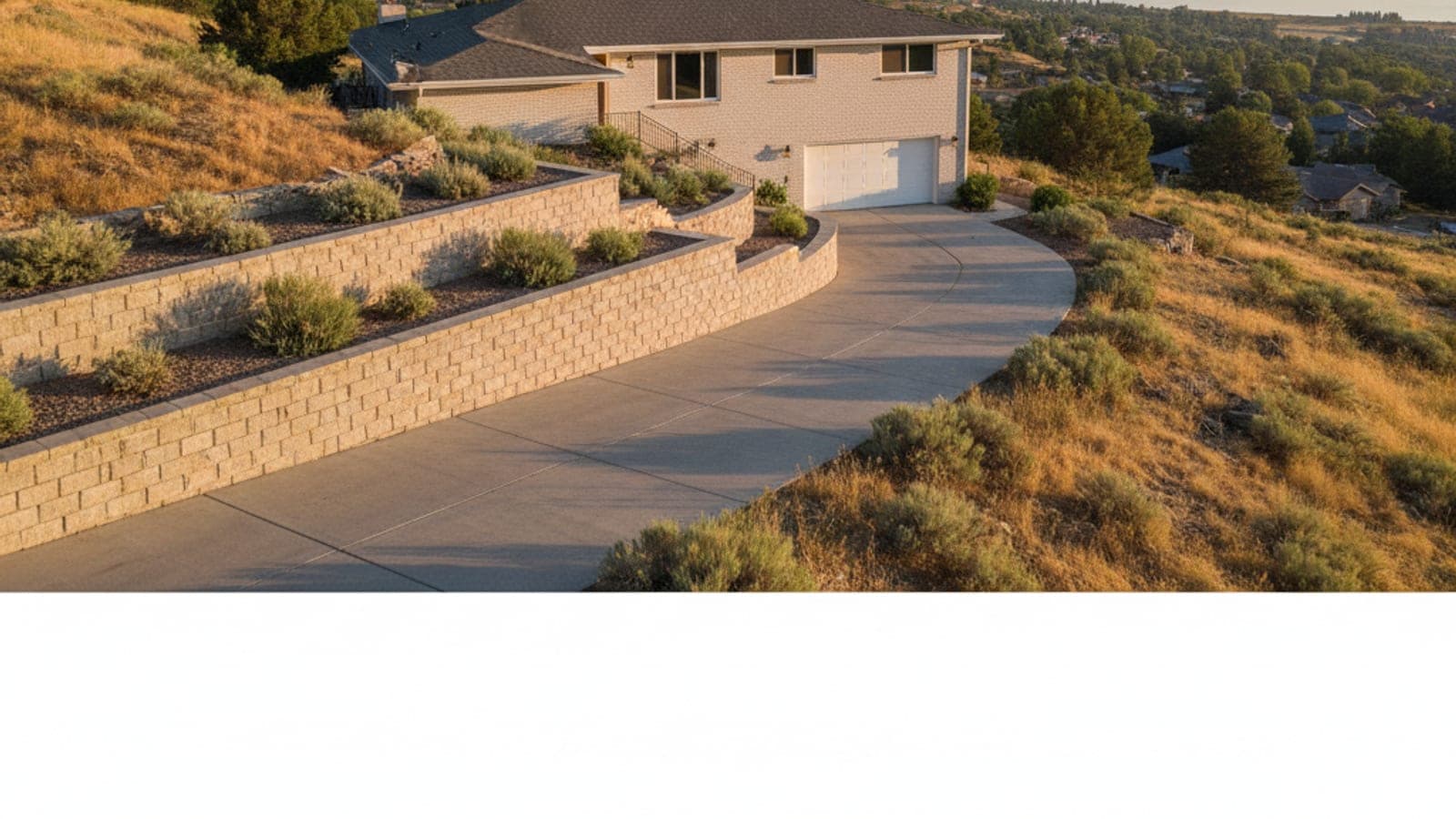
Closing costs for sellers in Utah run 6% to 9% of the price on a listed sale: 5% to 6% in commission, plus 1% to 3% for the buyer’s title policy, escrow, recording and any credits. Utah has no state transfer tax. On our cash purchases we pay the closing costs, though your mortgage, liens and prorated tax still come out of the proceeds.
What closing costs does a seller pay in Utah?
On a listed sale you pay the commission, the buyer’s title insurance policy, your own escrow fee, recording, and any credit you agree to after the inspection. Your mortgage, liens and share of the year’s property tax also come out, but those are debts you owe whoever buys, not costs of selling.
Utah’s state-approved Real Estate Purchase Contract (the REPC, effective December 4, 2024) sets most of these lines. Several depend on what you agree to, which is why the total comes as a range. This is how each line falls on a typical listed sale and on our purchases.
| Line on the seller’s statement | Typical Utah listed sale | Our cash purchases | Where the rule is |
|---|---|---|---|
| Your listing agent’s commission | What your listing agreement says | None, nobody lists the house | Your listing agreement |
| The buyer’s agent | Only what you agree to in section 4.3(e) | None | REPC 4.3(e) |
| The buyer’s owner’s title policy | The seller pays | We pay it | REPC 6.2 |
| Escrow or closing fee | Each side pays its own | We pay it | REPC 4.3(a) |
| Recording | $40 per document | We pay it | Utah Code 17-71-407 |
| State transfer tax | None | None | No chapter for one in Utah Code Title 59 |
| Inspection repairs or credits | Whatever you agree to | None, the condition is in the offer | Your contract |
| An HOA fee due on the sale | Seller, buyer or split, by checkbox | Can be yours; the contract names who pays | REPC 4.3(c) |
| This year’s property tax | Your share, January 1 to settlement | The same | REPC 4.1 |
| HOA dues and utilities | Yours to settlement | The same | REPC 4.1 and 4.3(d) |
| Mortgage, liens, judgments | Paid from your proceeds | The same | REPC 4.3(f) |
The first eight rows are the costs of selling. They are where a cash sale changes the statement, and they are what we mean by “no fees”. The last three stay with you whoever buys, us included.
Who pays closing costs in Utah, the buyer or the seller?
The contract decides. The REPC, the form approved by the Utah Real Estate Commission and the Attorney General’s office, sets these defaults, and each one can be changed in writing:
- Escrow fees. Each side pays its own fee to the escrow or closing office, under section 4.3(a).
- Title insurance. The seller pays for the buyer’s owner’s policy, under section 6.2. The Utah Insurance Department’s title insurance FAQ says the seller usually pays, and the two sides may negotiate it.
- Prorations. This year’s property tax, HOA dues and any rents are split as of the settlement deadline, under section 4.1.
- Assessments and HOA transfer fees. Special assessments approved before settlement, and any fee an HOA charges because the house changed hands, go to whichever box is checked in sections 4.2 and 4.3(c): seller, buyer, split equally, or other.
Sellers often miss that two of these lines are negotiable. The commission is whatever your listing agreement says, so get it in writing first. You pay the buyer’s agent only if you write a percentage or a dollar figure into section 4.3(e), and if no amount is entered, the form says you have not agreed to pay one. The Utah Division of Real Estate’s own questions a seller should ask an agent include “How does your commission work?” and “What closing costs should I expect?”
You can shop title and escrow as well. The Insurance Department calls Utah a “file and use” state: each title company must charge the rates it filed, but those rates differ from one company to the next. You can choose any title agency and compare escrow fees before you pick one.
Does Utah have a real estate transfer tax?
No. Title 59 of the Utah Code, the state’s revenue and taxation title, has no chapter for a real estate transfer tax, so nothing is owed to the state as a percentage of your price. You pay the county recorder’s flat fee instead.
Under Utah Code 17-71-407, the recorder charges $40 to record a document, plus $5 in some counties, and it is one fee per document however many attachments it carries. A typical sale records a few documents, such as the deed and the release of your old mortgage, so the recording line comes to tens of dollars.
What HOA fees does a seller pay at closing in Utah?
Usually three at most: your dues to the settlement date, no more than $50 for the payoff statement, and in some associations a reinvestment fee charged because the house sold. A checkbox in the contract decides who pays the last one.
- The payoff statement. Under Utah Code 57-8a-106, and 57-8-6.3 for condominiums, an association may charge for the payoff figures the title company needs only if its declaration, bylaws or rules allow it, never more than $50, and it cannot make you pay before closing. If it misses five business days after a proper written request, it cannot enforce a lien for what is owed at closing.
- Transfer fees. Utah Code 57-1-46 makes a transfer fee covenant recorded on or after March 16, 2010 void.
- Reinvestment fees. These are still allowed, paid to the association for common areas and reserves. Under a covenant recorded on or after May 6, 2026, the fee is capped at 0.5% of the home’s value, or 0.25% in an association of only detached houses with no major shared infrastructure, unless the house is in a master-planned development of at least 500 acres or 500 units. A reinvestment fee covenant recorded on or after March 16, 2010 is void unless a separate notice of it was recorded with the county.
The same section bars the fee on a transfer at death and on a bona fide transfer to a close relative. That protects heirs when the house passes to them, but not when they sell it later. Get the association’s figures in writing and check them against the box in section 4.3(c) before you sign.
What does a Bountiful closing statement look like, listed and cash?
On this hypothetical Bountiful rambler, the listing pays about $35K in selling costs and the cash sale pays none, while the tax and mortgage lines are the same in both. The listing still leaves about $25K more on the statement, because its price is higher. Every number is a round example. None of them is a quote, our pricing formula or a sale we made.
The house is a 1960s brick rambler on the east bench. The owners have $180K left on the mortgage, the year’s property tax is about $3K, there is no HOA, and settlement is June 30. Listed, it sells for $500K, with 3% to the listing brokerage, 2.5% to the buyer’s agent agreed in section 4.3(e), and a $5K credit after the inspection. For cash, take an example offer of $440K. The title and escrow figures are placeholders; ask a title company for its filed rates.
| Line | Listed at $500K | Cash sale to us at $440K |
|---|---|---|
| Sale price | $500K | $440K |
| Listing brokerage, 3% | -$15K | $0 |
| Buyer’s agent, 2.5% | -$12.5K | $0 |
| The buyer’s owner’s title policy | -$2K | $0, we pay it |
| Your escrow fee | -$500 | $0, we pay it |
| Recording the release of your old trust deed | -$40 | $0, we pay it |
| Inspection credit | -$5K | $0 |
| Property tax, January 1 to June 30 | -$1.5K | -$1.5K |
| Mortgage payoff, with interest to the day | -$180K | -$180K |
| HOA fees | $0, no HOA | $0, no HOA |
| What reaches your account | About $283.5K | About $258.5K |
The selling costs in the listed column add up to about $35K, 7% of the price, so a cash offer would have to reach about $465K to leave you the same on paper. At $440K this one falls short. Some of the difference is spent on costs no statement shows: the mortgage, insurance and utilities for the months the house is on the market. At an example $2K a month for three months, the listing is still about $19K ahead.
So on a house in this shape, with time to wait, list it. We say that on the phone too. The cash column buys you no showings, no repairs, no buyer’s loan to fall through and a closing date you pick, and whether that is worth $19K depends on your situation. Our post on how much below market value cash buyers pay works through why a cash offer sits where it does, and our Bountiful page covers selling there.
Do cash buyers pay closing costs in Utah?
Many do, and we pay them on our purchases. Other cash buyers pay only their own side, split the costs with you, or add a fee of their own, so read the contract to see which one you have.
A cash sale also removes the buyer’s loan costs, but those were never on your side of the statement. For you, the lines that change are the commission, the credits, and title and escrow. Our written cash offer has its own section on who pays what.
Before you sign with any buyer, ask for a draft settlement statement and read it for three things:
- A fee paid to the buyer. An “admin fee”, a “processing fee”, a “transaction coordination” charge, or a fee for the offer itself.
- The REPC defaults, unchanged. You paying the buyer’s title policy and your own escrow fee is ordinary on a listing. On a cash sale advertised as no closing costs, it should not be there.
- Who holds the money. Earnest money and the closing funds belong with a Utah title company, not with the buyer.
Our post on spotting a we-buy-houses scam covers the rest of the warning signs.
Questions people ask
What fees does a seller pay to a cash buyer?
None, if the buyer is straight with you. The money at closing goes to the title company, the county recorder, your lender and the HOA, and a cash buyer should be paying the closing costs, not charging you fees. An admin, processing or offer fee in a cash buyer’s contract is the price being lowered a second time under another name.
Do seller closing costs reduce the tax on the sale?
The costs of selling do. Under IRS Publication 523, selling expenses such as commissions, advertising and legal fees come off the sale price before the gain is figured; a mortgage payoff is not one of them. If you owned and lived in the house for at least 2 of the last 5 years, you can generally exclude up to $250K of gain, or $500K for a married couple filing jointly. Inherited houses follow different rules (see inherited house taxes), and a CPA should check your numbers.
When are Utah property taxes due, and how are they split at closing?
Utah property tax is due once a year, on November 30 under Utah Code 59-2-1331, for the calendar year and on the value as of January 1 under Utah Code 59-2-103. If you sell before the bill is paid, you usually credit the buyer for January 1 to the settlement date, and the buyer pays the whole bill in November. Taxes left unpaid from earlier years come out of your proceeds with a penalty of 2.5% or $10, whichever is greater (1% or $10 if paid by the next January 31), and interest of 7% to 10% a year after that.
Can a seller pay the buyer’s closing costs in Utah?
Yes, if the contract says so. A seller concession is a dollar figure written into the purchase contract, and it comes off your proceeds like any other selling cost. The buyer’s lender may limit how much a seller can contribute, so confirm the figure with the buyer’s agent first.
Does selling for cash change the mortgage payoff?
No. The payoff is the same whoever buys: the balance plus interest to the day, taken from the price at closing. Under the federal rule in 12 CFR 1026.36(c)(3), your servicer must send an accurate payoff statement within 7 business days of a written request, so it is worth ordering as soon as the contract is signed.
If the house is in decent shape and you can wait a few months, a listing’s higher price usually more than covers its selling costs. If it needs work you cannot fund, or the calendar is the problem, put a cash offer next to a listing estimate and compare the bottom lines. Get your cash offer: it comes in writing, it says who pays each line, and you are free to say no.
Find out what your house is worth in cash. Free, and no strings.
One phone call, or one short form. You'll have a real number by this time tomorrow.
Tell us about the house
Where the house is, your name, and a number we can reach you on. We call back within one business day, and you're free to say no.