
Guide · October 18, 2026 · 11 min read
How much below market value do cash buyers pay in Utah? Less than it looks, once a listing’s costs are counted.
A cash offer sits well below the retail price of a repaired house, and much closer to what a listing would actually leave you.
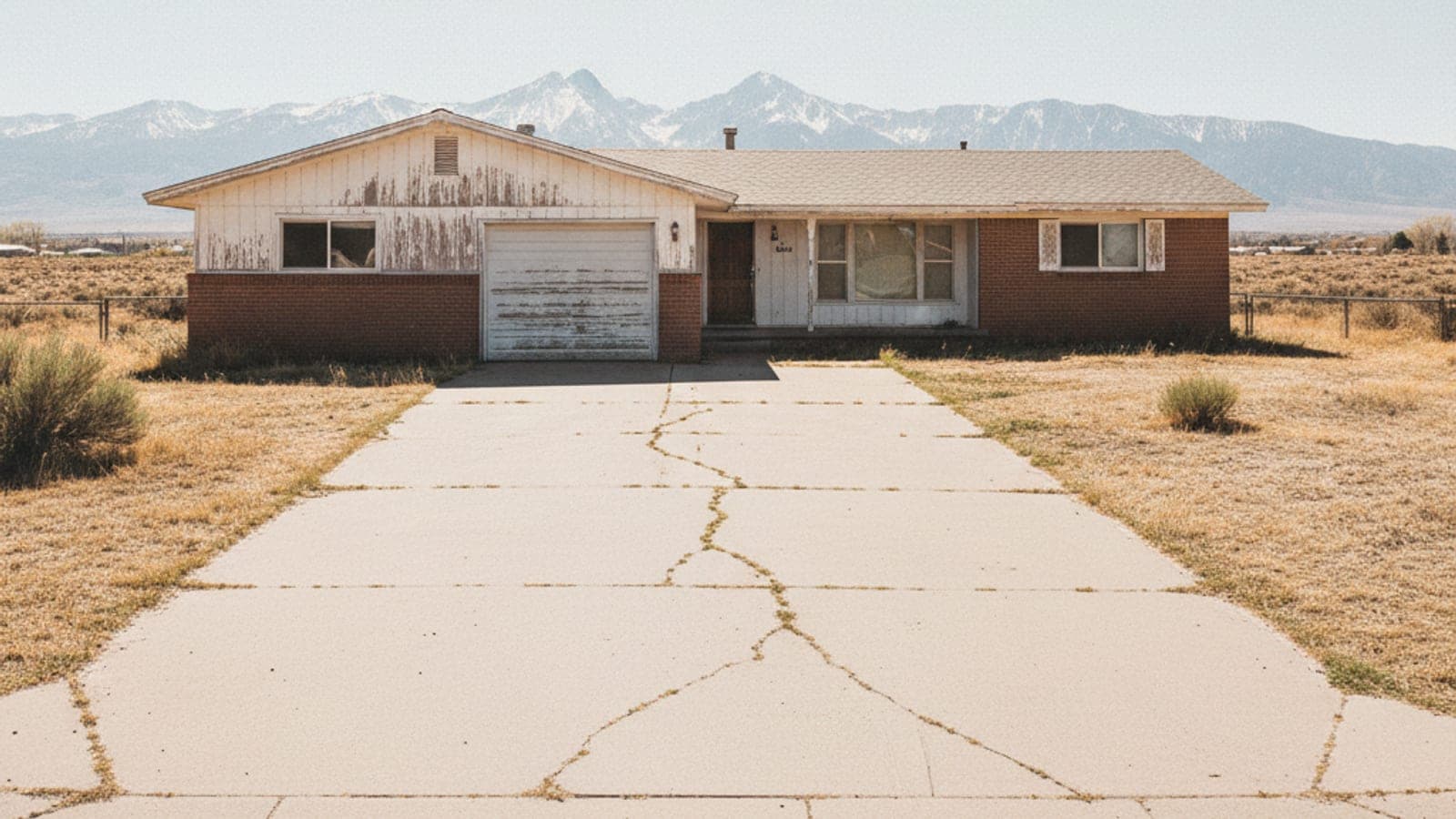
It depends on which market value you mean. Against the retail price of the house once repaired, a cash offer is lower by the cost of the repairs plus the buyer’s cost to hold, resell and earn a margin. Against what a listing would actually put in your pocket, the gap is much smaller, roughly the buyer’s margin.
How much below market value do cash buyers pay in Utah?
Below the repaired retail price, by the repairs plus holding, resale costs and a margin. Below your listed net, by much less, and most answers to this question give you only the first of those two numbers.
The first gap has published data behind it. The property data company ATTOM tracks houses across the country that are bought and resold within 12 months. In its Q2 2026 home flipping report, the typical flipped house resold for 21.5% more than the investor paid, a typical gross profit of $60,526. A 21.5% markup means the purchase price was about 82% of the resale price (our arithmetic on ATTOM’s figure, not one ATTOM reports). The gap had to pay for everything: the repairs, 161 days of holding the house from purchase to resale, the commission and closing costs on the resale, and whatever profit was left.
Utah is at the thin end. The same report put the typical margin in the Salt Lake City metro at 4.7%, one of the lowest of any metro with more than a million people. That figure covers every quick resale, including houses bought close to retail that needed little, so it is not a quote for a house that needs a roof. It does suggest that cash buyers pay below market value here mostly to cover costs, and that there is no fat margin hiding in the number.
No single percentage answers the question. The gap depends on what you compare the offer with:
| Compared with | How far below | What makes up the gap |
|---|---|---|
| The retail price of the house once repaired | The repairs, plus several months of holding costs, commonly 6% to 9% for the commission and closing costs on the resale, plus a margin | Costs the buyer pays after you have left |
| What you would net from listing it yourself | Much less, roughly the buyer’s margin | A listing pays a commission, closing costs, repairs and carrying costs too, so most of the first gap cancels out |
How does a cash buyer arrive at the number?
Start from what the house would sell for once repaired, then subtract the repairs, the cost of holding and reselling it, and a margin. What is left is the offer. A buyer who works that way can show you every line, and you can check them one by one.
- Comparable sales. Houses near yours, of a similar size and age, that actually closed in the last few months in repaired condition. Closed sales, not asking prices and not a website’s estimate. This is the after-repair value, the top of the sum.
- Repairs, at contractor prices. Whatever the house needs to sell to a buyer with a mortgage: a roof at the end of its life, a furnace, electrical, flooring, paint. It is priced at what the work costs, not at what a homeowner would pay a handyman.
- Holding costs. Property taxes, insurance, utilities and the cost of the money tied up while the work is done and the house is listed again. ATTOM’s 161 days is a fair guide to how long that takes.
- Resale costs. When the buyer resells, they pay a commission and closing costs on that sale, commonly 5% to 6% and 1% to 3% of the price.
- Your closing costs. On our purchases we pay the closing costs on your side, so they come out of the same sum. Ask any other buyer whether they do.
- A margin. The buyer’s profit, and their cushion for the roof that turns out to need new sheathing or the market that softens while the paint dries.
None of these is a secret, and the first three are things you can test yourself. Our cash offer page shows what the written offer contains and how to argue with each figure.
What does a worked example look like on a $450K Sandy house?
On these example numbers a cash sale leaves about $345K and a listing about $373K, so the real gap is about $28K, not the $105K the retail price suggests. The house is a hypothetical Sandy rambler built in the 1970s. Repaired, it would sell for $450K, and it needs a roof, a furnace, paint and flooring that together cost $35K. The numbers are round examples. They are not a quote or our pricing formula, and the 6% margin shows where a margin sits in the sum, not what ours is.
| Line | Cash sale | Listed with an agent |
|---|---|---|
| What repaired houses nearby closed at | $450K | $450K, if the appraisal holds |
| Repairs | -$35K, inside the offer | -$35K, paid before listing or given as an inspection credit |
| Commission | -$22.5K on the buyer’s resale, at 5% | -$25K, at 5.5% |
| Closing costs | -$7K on the resale, plus -$3K for your side, paid by the buyer | -$9K, at 2% |
| Holding or carrying | -$10K for about 5 months of work and resale | -$8K for about 4 months of prep, showings and closing, with a mortgage still being paid |
| Margin | -$27K, at 6% of the repaired price | None |
| What you receive | About $345K | About $373K |
Against the $450K retail price, the cash number is about 23% lower, which is the figure people have in mind when they say cash buyers pay 70 or 80 cents on the dollar. Against what the listing actually leaves you, after all the costs a headline price hides, the cash number is about $28K lower, roughly 7.5%.
The $28K is real money, and on this house the listing wins if you have $35K for the repairs before you list and four months to wait. It also assumes the appraisal comes in at $450K and the buyer does not ask for more after their inspection. If you have neither the $35K nor the time, the listing column is not available to you at that price.
Why is the discount larger on a house that needs work?
Because every repair comes off the price at its full cost, and big repairs also add time, risk and a smaller pool of buyers. A house that needs paint and carpet lands close to what a listing would net after fees, while one that needs a roof, a furnace and a foundation lands a long way from it.
As the work grows, each of those widens the gap:
- Time. A cosmetic refresh takes weeks; a roof, a furnace and new electrical take months. Every month adds taxes, insurance, utilities and the cost of money to the holding line.
- Uncertainty. Nobody knows what is behind the drywall until it comes down. A buyer prices that risk into the margin, and the more of the house that has to be opened, the bigger the cushion.
- Fewer buyers. A financed buyer’s lender sends an appraiser, and a house with a failing roof or no working heat can be turned down as collateral until it is fixed, especially on FHA and VA loans. A house that cannot pass that review can only sell to buyers paying cash, and fewer buyers means a lower price whoever you sell to.
People often expect a listing to bring the repaired price minus the repairs. On a house that needs heavy work, it brings whatever cash buyers and investors bid for it on the open market, minus a commission.
What does a seller keep after commission, repairs and time with an agent instead?
On a house in decent shape, more than a cash sale leaves you, often tens of thousands of dollars more. On the Sandy example it was about $28K more. We say that on the phone too.
To redo the listing column for your own house, you need these figures:
- The sale price, from closed comparable sales, not the asking price you hope for.
- Commission, commonly 5% to 6%, split between the two agents.
- Closing costs, usually 1% to 3%. On Utah’s state-approved purchase contract, the seller pays for the buyer’s title insurance policy and each side pays its own escrow fees.
- Repairs or credits, whatever the buyer’s inspector finds and the buyer asks for.
- Carrying costs, the mortgage, taxes, insurance and utilities for the months it takes. Utah’s median time on market was 65 days in August 2026, in Realtor.com’s figures published by the St. Louis Fed, and the closing still comes 30 to 45 days after an accepted offer.
The full version of this arithmetic, with both columns worked side by side, is on our cash buyer versus realtor page. Our post on the pros and cons of a cash offer works a second example on a Millcreek house that needs a roof.
When is the discount not worth it?
When the house needs little and you have the time and the money to carry it while it sells. In that case the gap is mostly the buyer’s margin, and you are paying it for speed and certainty you do not need.
The discount is usually worth paying in a handful of cases:
- A deadline you do not control, such as a divorce decree, a foreclosure date, a probate court or a job that starts in another city. Our guide to how long a cash sale takes sets out each stage in days.
- A house that needs more work than you can fund, because the listing column assumes you have the repair money first.
- A house a lender will not finance, where the open market is cash buyers anyway.
- An inherited or vacant house, where every month of taxes, insurance and utilities comes out of the estate.
It is not worth paying when the only reason is that listing feels like a hassle, or when the buyer cannot explain their number. If a slow market is the worry, our post on selling a house fast in a slow market sets out when a price cut beats a cash offer, and what speed costs in plain numbers is in our post on fast home offers.
Questions people ask
Do cash buyers pay market value?
Rarely the retail price, no. A cash buyer pays what the house is worth to someone who has to repair it, hold it and resell it. On a house in good shape that lands close to what a listing would net you after fees; on a house that needs major work it lands well below the repaired price, because the work comes out first.
Is 70 percent of value the rule?
No. The 70% rule is a flipper’s rule of thumb: pay no more than 70% of the after-repair value, minus the repairs. On the Sandy example that is $315K minus $35K, or $280K, well under the line-by-line $345K. It is a quick screen for investors, not a price, and a buyer who quotes it without the lines behind it is using a shortcut. That is also why no one percentage can tell you what a cash buyer will pay.
Can you negotiate a cash offer?
Yes, by arguing with one of the figures rather than asking for more. Show the buyer a comparable sale they missed, or a contractor’s bid under their repair estimate, and a fair buyer’s number moves. If it cannot move, a straight buyer tells you so instead of inching up for two weeks.
Do cash buyers pay closing costs?
Usually, and we do. Read the contract to be sure, because some buyers split them or charge their own fees. Either way you still pay off your mortgage, any liens, and your share of the year’s property taxes from the proceeds, because those are your debts, not closing costs. Utah property taxes are due once a year, on November 30 under Utah Code 59-2-1331, so a sale before the bill is paid usually credits the buyer for the months of the year you owned the house.
Will a cash buyer show me how they got to the number?
A fair one will. Our written cash offer sets out three figures: what comparable houses nearby closed at, what the repairs cost, and what it costs us to hold and resell. Ask every buyer you talk to for the same thing. One who will not show the lines is asking you to trust a number, and our page on companies that buy houses lists the other questions worth asking.
If the house is in decent shape and you can wait three months, an agent will usually net you more, and the Sandy example shows by how much. If it needs work you cannot fund, or the calendar is the problem, a cash offer is worth having in writing next to the listing estimate. Get your cash offer. It costs nothing and comes with the lines behind it, and you are free to say no.
Find out what your house is worth in cash. Free, and no strings.
One phone call, or one short form. You'll have a real number by this time tomorrow.
Tell us about the house
Where the house is, your name, and a number we can reach you on. We call back within one business day, and you're free to say no.