
Guide · November 19, 2026 · 12 min read
Using a power of attorney to sell a parent’s house in Utah, and what to check before you list.
A power of attorney lets you sign only as far as its words reach. Read it, and show it to the title company, before anyone puts the house on the market.
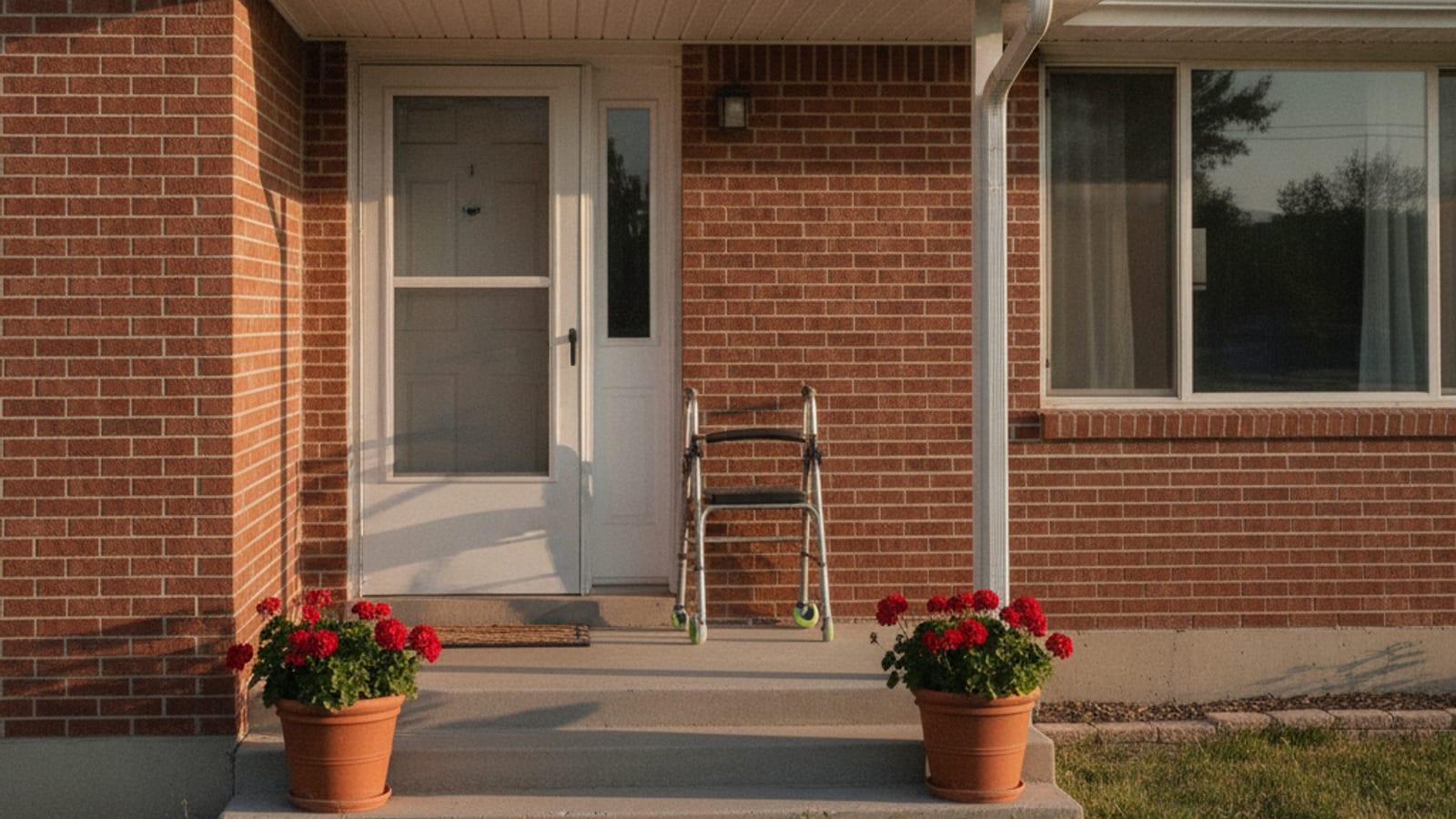
You can use a power of attorney to sell a house in Utah if the document gives the agent authority over real property and the title company accepts it. The agent signs the deed, and the money belongs to your parent. If your parent can still sign, the sale is hers to sign.
That leaves three checks before anyone lists: what the document says, whether the title company accepts it, and whether your parent can still sign. We are not lawyers; a Utah elder law or estate attorney can tell you what your parent’s document allows.
Can you sell a house with power of attorney in Utah?
Yes. Utah’s Uniform Power of Attorney Act lets an agent with general authority over real property sell and convey it (Utah Code 75A-2-204) and sign and record the documents a sale needs (75A-2-203). The real property power is a power of attorney to sell houses and land. On the day you sign, the document must grant it, by naming real property or by giving authority to do everything your parent could do (75A-2-201), and your parent must be alive and must not have revoked it (75A-2-110).
First, though, ask whether your parent can sign for herself. A power of attorney adds a signer and, unlike a court-appointed conservator, takes no decision away from her. The Utah Courts’ power of attorney page says agents must decide the way she would want, not the way they would for themselves. If she signs the deed herself, with a mobile notary where she lives if need be, the title company has no power of attorney to review, and nobody can doubt later that the sale was her choice. Whether she still can sign is a question for her doctor and an elder law attorney.
What does the power of attorney document have to say?
It has to be signed before a notary, still be in force, and cover real property. Utah’s statutory form (75A-2-301) lists Real Property as the first subject to initial. Check your parent’s document line by line:
| Check | What to look for | Utah rule |
|---|---|---|
| Notarized | A notary’s acknowledgment of her signature, or of someone who signed at her direction in her presence | 75A-2-105 |
| Date and place | Signed in Utah on or after May 10, 2016: it meets section 105. Earlier or elsewhere: it met the law that governed it then | 75A-2-106 |
| Real property | Real Property initialed, a citation of 75A-2-204, or authority to do all acts she could do | 75A-2-202 |
| Durable | No line ending it if she becomes incapacitated. Utah’s default is durable | 75A-2-104 |
| Start date | When signed, unless it waits for an event, such as a doctor’s written finding of incapacity | 75A-2-109 |
| Who acts | You, by name. A successor acts only once the first agent cannot or will not | 75A-2-111 |
| Right kind | A financial power of attorney. One for health care covers medical decisions | 75A-9-101 |
A document signed from 2016 to 2024 may cite Title 75, Chapter 9: the same act, renumbered as Title 75A, Chapter 2 in 2024.
What will the title company ask for before closing?
The power of attorney, and possibly your sworn statement that it is still in force. Utah’s act gives anyone asked to accept a notarized power of attorney 7 business days to accept it or ask for that statement, then 5 business days after receiving it to accept (Utah Code 75A-2-120).
Under 75A-2-119, it may ask for and rely on:
- An agent’s certification. You swear under penalty of perjury, before a notary, that your parent is alive and has not revoked the document, and that any event it was waiting for has happened. Utah prints an optional form in 75A-2-302.
- A lawyer’s opinion on a legal question, with the reason in writing. Your parent pays unless it is requested more than 7 business days after the document was presented.
- A translation of any part not in English.
A copy works like the original, and the title company may not demand a different form for authority the document already grants. It may refuse in the cases the act lists, among them a good-faith belief that you lack authority to sell, or a report of suspected abuse by the agent to the state’s Division of Aging and Adult Services. Send a copy the day the contract is signed, so there is time to answer any question before closing.
What can an agent under a power of attorney not do?
Anything the document does not grant, anything after your parent dies, and five acts that need an express grant even in a broad document (75A-2-201):
- Make a gift, and by default no more per person each year than the federal gift tax annual exclusion (75A-2-217).
- Create or change rights of survivorship, such as adding your name to the deed.
- Create or change a beneficiary designation.
- Create, change or revoke a trust.
- Hand the authority to someone else.
An agent who is not her ancestor, spouse or descendant may not use her property to create an interest for themselves unless the document allows it. That limit does not reach a son or daughter, but every agent owes the duties in 75A-2-114: good faith, loyalty to her, no conflict of interest that gets in the way, and a record of every receipt, payment and transaction. An agent who breaks the act must restore what her property lost (75A-2-117).
What if your parent can no longer sign and there is no power of attorney?
If the house is in her name alone, nobody can sign for her until a court appoints a conservator or approves the sale. In the Utah Courts’ words, “You can’t get a power of attorney over someone: it has to be given to you.” If the house is in a living trust, read the trust: it may name a successor trustee who can act.
She may still be able to sign one. The test is narrow: she must understand that she is appointing an agent to handle her financial affairs, though not how the agent will manage them (75A-2-105). An elder law attorney can judge that with her.
If she cannot, a family member can petition for a conservator. A court may appoint one, after notice and a hearing, for a person who cannot manage her property effectively when that property needs managing (Utah Code 75-5-401). She must be served in person at least 10 days before the hearing (75-5-405). The court can also skip the appointment and approve one transaction, such as the sale (75-5-409).
A guardian decides about her care and where she lives, and a conservator manages her property; the Utah Courts’ page on the options suggests a conservator when the person owns real property. A conservator may sell land at a private sale without going back to court unless the letters limit it (75-5-424), and owes the court an inventory within 90 days and a yearly accounting (conservator duties). The courts call it a last resort, because it takes decisions away from the person. Their Finding Legal Help page points to the Utah State Bar’s lawyer directory.
What would this look like for a Bountiful house after a move to memory care?
On the round numbers below, a listing leaves the mother about $28K more than a cash sale, about four months later. The family lists if it can cover her care bills in between.
The house is a hypothetical 1960s rambler on the Bountiful east bench, paid off. Its owner, 84, moved into memory care in the summer. In 2019 she signed Utah’s statutory form before a notary, initialed Real Property, and named her daughter as agent and her son, out of state, as successor. On most days she no longer follows a conversation about money, so her daughter signs, and still tells her about the sale in plain words. The figures are examples, not a quote or our pricing formula.
| List with an agent | Sell as it stands, for cash | |
|---|---|---|
| Price | $600K, after the work | $495K |
| Roof, paint and carpet | -$30K | None |
| Commission, at 5.5% | -$33K | None |
| Closing costs, at 2% | -$12K | None, on our purchases |
| Tax, insurance and utilities | -$3K over about 5 months | -$1K over about a month |
| What she receives | About $522K | About $494K |
| When | About 5 months: the work, the market, then 30 to 45 days to close | As little as 7 days, or a later date |
Her care costs $8,000 a month in this example, and her savings cover about three more months. If her children can carry the other two months, the listing is better for her. If they cannot, the cash sale pays the facility from the month it closes, and the $28K is what that certainty costs her. Either way, the daughter files the estimate, the offer and the care bills together, because her brother can ask to see the record.
When does selling a parent’s house for cash make sense?
When her care sets a date a listing cannot meet, or nobody in the family can manage the work a listing needs. If her money carries the care through a listing and the house is in decent shape, list it with an agent. It will usually leave her more, and we say that on the phone too.
A cash sale fits in four cases:
- Care bills. The facility bills monthly, and a listing takes months to pay out.
- Repairs. The house needs work nobody can fund or oversee.
- Belongings. It is still full of her things. Our guide to selling a house that is still full weighs clearing it first.
- Distance. It is empty and far from you; our vacant house guide sets out what an empty house costs to carry.
Hold off if she may come home, or if Medicaid pays or may pay for her care: read the Medicaid answer in that vacant house guide and call her caseworker first. Hold off too if your siblings object, because no buyer can settle that.
When cash is the right call, how a fast cash sale works with us sets out each step. You get a written offer, typically within 24 hours of the first call, and close in as little as 7 days or on a later date you pick. There is no commission, nothing to repair or clean, and we pay the closing costs on our purchases.
Questions people ask
Does a power of attorney still work after the parent dies?
No. A Utah power of attorney ends when the principal dies (75A-2-110). The house then passes by its title: a trust, a surviving joint owner, a transfer on death deed, or probate, where a court-appointed personal representative signs. Our page on selling an inherited home in probate covers those steps.
Does the power of attorney need to be recorded with the county?
Utah’s act does not make recording a condition of using it. It says a copy may be recorded in the county where the house sits, attached to an affidavit of the person accepting it (75A-2-106). Your title company will say whether it records one with the deed; for a Bountiful house, that is the Davis County Recorder.
Can I sell my parent’s house to myself?
Possibly, but talk to an elder law attorney first. A son or daughter acting as agent must still act loyally and avoid conflicts of interest (75A-2-114), and a price below value is partly a gift, which needs express authority (75A-2-201). The protections are an independent appraisal, your parent’s own signature if she can give it, or a court’s review, which an agent may ask for under 75A-2-116.
Who gets the money from the sale?
Your parent. The Utah Courts tell agents to keep her funds separate from their own and to record everything spent or received. You can be repaid expenses you reasonably paid for her, and paid reasonable compensation unless the document says otherwise (75A-2-112).
What if my siblings disagree with the sale?
Settle it before anyone lists. Once your parent has lost capacity, any of her children can ask the agent for the records, which are due within 30 days or with a written reason for more time (75A-2-114). A child can also ask a court to review the agent’s conduct (75A-2-116), but if your parent can still decide, the court dismisses that petition when she asks.
If her money will carry the care while a listing runs and the house is in decent shape, list it. If her care sets a date a listing cannot meet, a cash offer is worth having in writing next to the agent’s estimate. Get your cash offer: it costs nothing, and you are free to say no.
Find out what your house is worth in cash. Free, and no strings.
One phone call, or one short form. You'll have a real number by this time tomorrow.
Tell us about the house
Where the house is, your name, and a number we can reach you on. We call back within one business day, and you're free to say no.