
Guide · October 18, 2026 · 10 min read
How to sell a vacant house in Utah, and what it costs to keep one empty.
An empty house still sends bills for tax, insurance and the heat that keeps the pipes from freezing, so the choice comes down to how many months of them you want to pay.
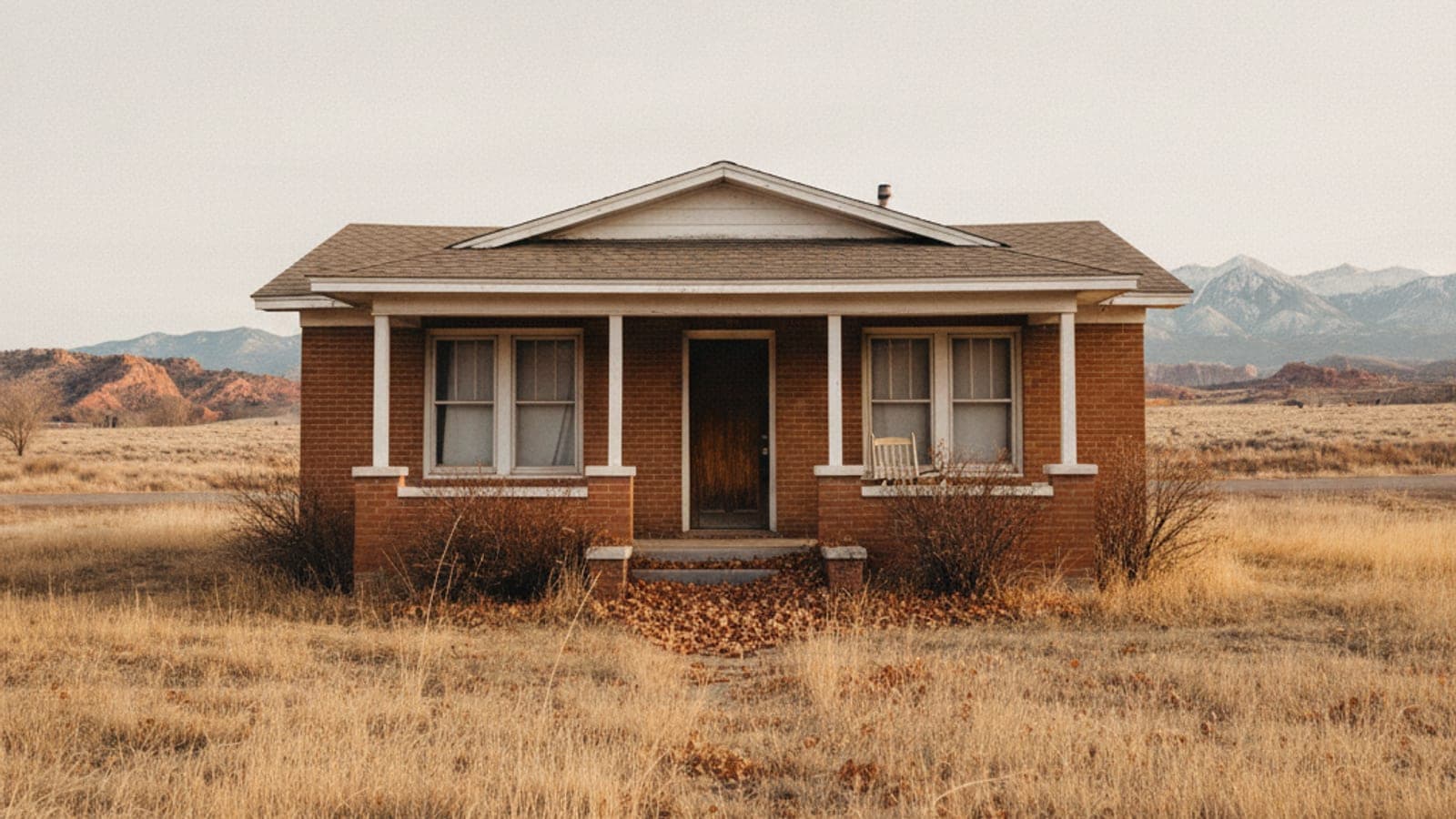
To sell a vacant house in Utah, list it with an agent and carry the costs until it closes, or sell it as it stands to a cash buyer on a date you pick. An empty house costs money every month, so the choice turns on its condition and how long you can carry it.
If the house is in good shape and you can carry it for about 90 days on the market, an agent will usually get you more for it. We say that on the phone too.
How much does a vacant house in Utah cost to keep each month?
On example numbers for a paid-off house worth $400K, about $640 in a winter month, or about $790 if the house loses its property tax exemption. Add the mortgage payment if there is one.
The house is a hypothetical Tooele rambler, empty since your mother moved into assisted living in the spring. It is paid off and in fair shape, and you live an hour away. Every figure below is an example, not a quote.
| Monthly cost | Example, Tooele house | Where your real number is |
|---|---|---|
| Property tax, with the 45% residential exemption | $183 (taxed on $220K, at an example rate of 1%) | Your county tax notice |
| Property tax, if the exemption is lost | $333 (taxed on the full $400K) | The county assessor decides; see below |
| Vacant house insurance | $150 | A quote from your agent |
| Gas and power, heat kept above 65°F | $150 in a winter month, $50 in summer | Last winter’s bills at the house |
| Water, sewer and trash, kept on | $60 | The city utility bill |
| Snow cleared in winter, lawn mowed in summer | $100 | A neighbor or a yard service |
| HOA dues | $0 here | Your HOA statement, if there is one |
| Mortgage | $0 here, paid off | Your mortgage statement |
| Total, winter month | About $640, or about $790 without the exemption |
Utah’s median time on market was 67 days in September 2026, in Realtor.com’s figures published by the St. Louis Fed, and closing usually takes another 30 to 45 days after an accepted offer. Call it four months: about $2,600 on this house in winter, or about $3,200 without the exemption. The same median was 85 days in January 2026, so a house listed in the cold months tends to sit longer.
That is less than most people expect, but the table leaves out the bill that does not come monthly: a burst pipe, or a break-in nobody notices for weeks.
What does vacant house insurance cover, and do you need it?
It covers the house while nobody lives there, which an ordinary homeowner policy may stop doing. Many homeowner policies limit coverage once a house has been vacant for a stated period, and that period is written in your own policy. Read the vacancy clause first, then call your agent.
The Utah Insurance Department’s homeowner’s insurance page suggests reviewing your coverage every year with your agent, and says changes in circumstances may require adjustments to your policy. A parent moving out is that kind of change. Tell the insurer in writing that the house is empty, and ask three questions:
- How does the policy define vacant and unoccupied, and after how many days does each change the coverage?
- Which losses stop being covered once the house is vacant? Ask about vandalism, theft and water damage by name.
- What keeps freeze damage covered: heat kept on, or the water shut off and drained?
If the policy no longer fits, the fix is a vacancy endorsement or a separate vacant house insurance policy. Expect it to cost more than the policy it replaces, and get the quote before you decide how long to carry the house.
If a loss does happen, the department’s home claims page says to call the insurer as soon as possible, make the repairs needed to prevent further damage, and wait for its inspection before permanent repairs.
Does an empty house keep Utah’s primary residential exemption?
Not automatically. Utah Code 59-2-103 gives residential property a 45% reduction in value, so a primary residence is taxed on 55% of what it is worth. The definition in 59-2-102 ties that to property used as a primary residence, and an unoccupied house counts only if the county assessor determines it will be used as one.
On the Tooele example that is the difference between being taxed on $220K and on $400K, about $150 a month at the example rate. When an owner no longer qualifies, 59-2-103.5 generally requires a written statement to the county board of equalization and a declaration on the state income tax return. Call the county assessor’s office and ask whether the house still qualifies this year.
Renting is the exception that keeps it. Section 59-2-103 also allows the exemption on a house that is the primary residence of a tenant, with a signed declaration to the assessor under 59-2-103.5. That is one reason renting it out is worth pricing before you sell.
How do you keep an empty house from freezing in a Utah winter?
Keep the heat on, or have the water shut off and the lines drained, and have someone check the house every week. Salt Lake City Public Utilities’ frozen pipe guidance says to set the thermostat above 65° if you are leaving the house for multiple days, and to open the cabinet doors under the sinks so household air keeps the pipes warm.
The heat matters for the insurance as much as the plumbing. The Utah Insurance Department’s claims page says frozen pipes from extreme cold may not be covered if the damage is due to negligence, such as failing to keep an adequate temperature in the house when you are able to. A furnace that quits in January with nobody there to notice is that case.
A winter routine for a house nobody lives in:
- Heat. Keep the thermostat above 65°F and have the furnace serviced before the first cold snap. Give a neighbor a key.
- Water. If it will sit all winter, ask a plumber about shutting off the main and draining the lines, and ask your insurer whether that satisfies its freezing clause.
- Looking lived in. Clear the walks after a storm, forward the mail, and put a lamp on a timer.
What are the ways to sell a vacant house in Utah?
Four. Listing costs the least in price and the most in months; a cash sale is the reverse. Fixing it first raises the price and adds months. Renting turns the bills into income and keeps the house.
| Route | How long, roughly | What it costs you | Best when |
|---|---|---|---|
| List it as it is, with an agent | 67 days median on the market, then 30 to 45 days to close | Commission of 5% to 6%, closing costs of 1% to 3%, inspection credits, and the monthly costs throughout | It is in good shape and you can carry it for four months |
| Fix it up, then list it | The repair weeks, then the same listing time | The repairs up front, plus more months of carrying | The work is modest and adds more than it costs |
| Sell it as it stands to a cash buyer | A written offer, typically within 24 hours; close in as little as 7 days, or on a later date you pick | A price below retail. On our purchases: no commission, no repairs, no cleaning, and we pay the closing costs | It needs work you cannot fund, you are far away in winter, or someone else set the date |
| Rent it out | Weeks to find a tenant, then years | Landlord duties, repairs, and empty months between tenants | You want to keep it and the rent covers the costs |
Which row fits depends on the house and on you. Our page on selling versus renting runs the rental numbers, and selling a house with tenants covers what a lease does to a later sale.
We buy vacant houses anywhere in the state, including ones that sat through a winter with the water off; how we buy across Utah sets out the rest. If your parent has died, the house belongs to the estate and the steps change: see whether there is a time limit on selling inherited property and inheriting a house that is paid off.
When does listing a vacant house with an agent beat a cash sale?
When the house is in good shape and you can carry it for about 90 days on the market. On the Tooele example, four months of carrying costs is about $2,600 in winter. The gap between a cash offer and what a listing nets on a house in good shape is usually far larger than that. Our post on how much below market value cash buyers pay works one example where it came to about $28K.
A vacant house in good shape also shows well: the agent can book showings any day, and buyers see clean, empty rooms. So the empty months become a reason to sell to a cash buyer only when they stack up with something else:
- The house needs work you cannot fund. The listing route assumes you pay for repairs before a buyer’s inspector finds them.
- It is November and the house is two hours away. Winter is the hardest stretch to carry from a distance, and it is when Utah’s median days on market run longest.
- The insurer will not cover it empty. Without coverage the risk is the whole house, not $150 a month.
- Someone else sets the date. A care facility bill, a Medicaid review, or an estate that has to close.
If none of those are true, list it. Have the furnace serviced, keep the heat on and the walks clear, and give it a season.
Questions people ask
Does homeowners insurance cover a vacant house?
It depends on your policy, and many limit coverage once a house has been empty for a stated number of days. Read the vacancy clause, then tell your insurer in writing that nobody lives there. If the standard policy no longer fits, ask for a vacancy endorsement or a separate vacant house insurance policy before the gap opens.
Does Salt Lake City charge a fee for an empty house?
Not for one that stays secure: the city monitors secured vacant buildings until they are reoccupied. Its civil enforcement rules say a building without intact windows, doors or working locks must be boarded and registered unless it is fixed within 10 days of notice. The city’s boarding registration form sets the residential fee at $3,000 a year for years 1 and 2, $6,000 for years 3 to 5, and $9,000 from year 6. If the house is in another Utah city, ask its code enforcement office what it requires.
Is selling a vacant house harder than selling one you live in?
Usually not, if it is in good shape: nobody has to tidy before a showing. What is harder is everything around the showings: the heat, the insurance and the weekly checks fall on someone who does not live there, often from another city.
Can you sell a parent’s house while they are in care?
Yes, if your parent signs, or someone with legal authority signs for them: an agent under a power of attorney, or a court-appointed conservator whose Letter of Conservatorship sets out what they may do. If Medicaid pays for the care, talk to the caseworker first. Utah’s Medicaid manual can exclude the home while the owner intends to return to it (section 521-1), but money from selling it generally counts as an asset unless it buys another excluded home within 3 calendar months (section 531-3). A Utah elder law attorney can tell you which rules apply.
Do you have to empty a vacant house before you sell it?
For a listing, usually yes, because clean empty rooms photograph and show better than a houseful of someone else’s things. For a cash sale to us, no. Take the photographs, the papers and whatever matters to you, and leave the rest; clearing it is our cost and it is already inside the number.
If the house needs work you cannot fund, sits far away through a Utah winter, or has a date someone else set, a cash offer is worth having in writing next to the listing estimate. Get your cash offer: it costs nothing, and you are free to say no.
Find out what your house is worth in cash. Free, and no strings.
One phone call, or one short form. You'll have a real number by this time tomorrow.
Tell us about the house
Where the house is, your name, and a number we can reach you on. We call back within one business day, and you're free to say no.